Obese patients need weight control to reduce risk of recurrence
Overweight or obesity is a high risk factor for gastric cancer. Body mass index (BMI) = weight (kg)/height (m) × height (m), defined by WHO as overweight with a BMI ≥ 25 and obese with a BMI ≥ 30. Such gastric cancer patients need to control their weight through diet to reduce the risk of recurrence and second gastric cancer.
The Mediterranean diet reduces the risk of recurrence and death in patients with gastric cancer
The “Mediterranean diet” may be the ideal diet for patients with overweight or obese gastric cancer. The Mediterranean diet is a diet represented in the Mediterranean region that encourages eating more fresh vegetables, fruits, fish, seafood, legumes, nuts and grains, and using vegetable oils (such as olive oil) instead of animal oils (such as lard, butter, etc.). Studies have shown that the Mediterranean diet not only leads to a lower risk of gastric cancer, but also reduces the risk of death in gastric cancer patients by 28%. Exploring the reasons for this found that the vegetables, fruits and whole grains in the Mediterranean diet may be associated with a lower risk of death from stomach cancer, plus this lighter diet helps control weight, which also helps reduce the occurrence or recurrence of stomach cancer.
The Mediterranean diet is hard to follow, so localized tips are available
But there are regional differences between the Mediterranean region and our own country, and sometimes there are recipes that patients can’t follow. The Mediterranean diet is characterized by high fiber, high protein, low fat, and low calories, and we can develop a Chinese Mediterranean diet based on this characteristic. Eat 2 to 3 times a week; 1-2 boxes of milk, with yogurt available for those who are lactose intolerant; no more than 1 tael of red meat and no more than 3 times a week; a handful of soybeans and nuts, at least 3 times a week; use vegetable oils such as olive oil (soybean oil and peanut oil are also available) when cooking, avoiding animal oils, and keep the processing of food as simple as possible, with steaming, boiling and boiling as the main methods, avoiding deep-frying.
For example, a 60-kg patient needs about 1800 kcal per day. The following 2-day recipe from the Chinese Mediterranean diet can be used to meet this energy requirement, although the types of food and portion sizes can be adjusted according to the individual patient’s body condition and preferences.
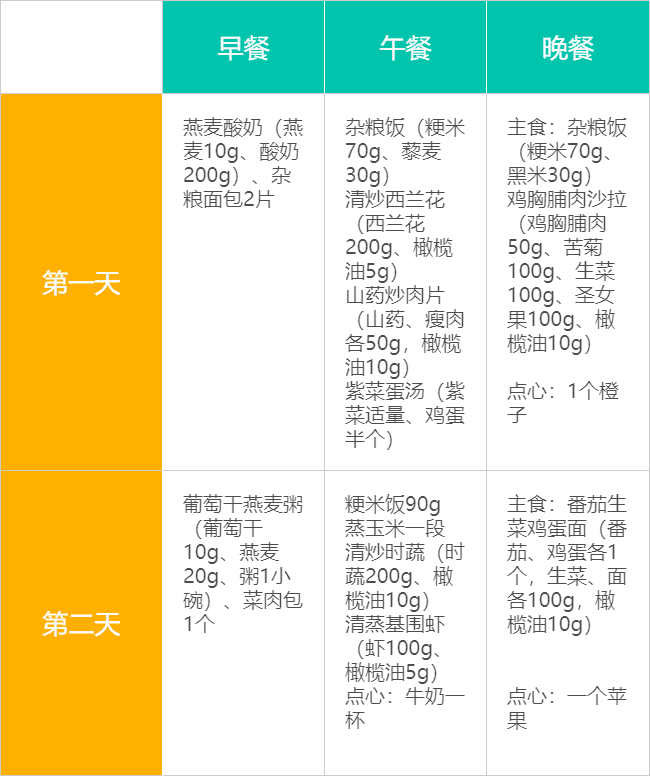
The Mediterranean diet is good, but not for everyone
It’s worth noting that the Mediterranean diet is more plant-based, which can lead to malnutrition over time if patients with digestive deficiencies (such as gastric ulcers) have difficulty absorbing too much plant-based food. This is why these recipes are more suitable for overweight and obese patients who have fully recovered their gastrointestinal function, but they are not suitable for patients with cachexia, nor should they be used for patients who are at nutritional risk, such as those who have undergone subtotal gastrectomy, and require prior consultation with a doctor.