In the advanced stages of esophageal cancer, you may have more severe difficulty swallowing and be limited to a liquid or semi-liquid diet, sometimes even water, because even a little crumb of food may cause you pain and discomfort when swallowing.
Specifically, the symptoms that may occur in advanced esophageal cancer are more related to the anatomy and location of the esophagus.
What happens in advanced stages?
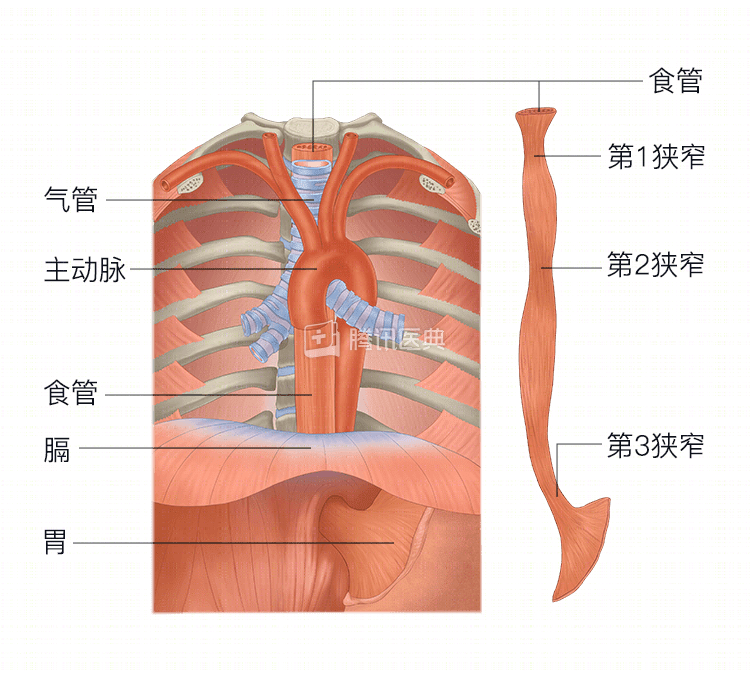
As shown in the image above:
- Advanced esophageal cancer will cause further narrowing of the lumen due to continuous infiltrative growth of the tumor and progressively worsening dysphagia, especially when eating solid food. Sometimes vomiting may occur.
- As the tumor continues to infiltrate and grow into the tissue surrounding the esophagus, you may experience pain behind the sternum.
- You may have an irritating cough and difficulty breathing when the airway is compressed.
- When an esophagotracheal fistula occurs, you may experience choking on food, fever, and thick, foul-smelling sputum, which can lead to pneumonia or lung abscess.
- When tumor tissue invades the recurrent laryngeal nerve, you may have hoarseness.
- When the phrenic nerve is invaded, it can cause intractable erratic reflux (i.e. hiccups); it can also cause paralysis of the phrenic nerve, resulting in paradoxical movement of the diaphragm, further causing dyspnea.
- When the tumor ruptures or invades large blood vessels, it can cause fatal hemorrhage.
- Rupture of necrotic tumor tissue into the mediastinum can cause infection.
- If esophageal cancer metastasizes distantly, metastasis to the liver can cause hepatomegaly and jaundice; metastasis to the abdomen can cause abdominal mass and fluid in the abdomen; metastasis to the bone can cause bone pain and pathological fracture; metastasis to the skin can cause subcutaneous nodules or even masses protruding from the body.
- Late stage esophageal cancer may also show signs of cachexia such as anemia and extreme emaciation.
How do I respond?
None of the above advanced symptoms are something you and your family can just think about. Once they occur, we recommend that you go to a regular hospital as soon as possible and actively seek help from an oncologist. The doctor will use detailed interviews, imaging, and gastroscopic pathology biopsies to determine exactly what the problem is and treat you accordingly.
For example, if dysphagia worsens, your doctor may place an artificial self-expanding metal stent, insert a gastric tube for enteral nutrition, laser therapy, or photodynamic therapy to relieve your symptoms. Then, for example, if there is an advanced cachexia condition, you will need to be seen by a nutritionist for specialized nutritional intervention.
We recommend that you follow your doctor’s advice and treat on time and as needed. Only with the help of your doctor can you win the “long war” against cancer.
We also want you to be optimistic and confident that you can overcome your disease. Most patients can improve their quality of life and extend their life span through periodic treatment. Therefore, we hope you can be prepared to fight with “tumor king” for a long time and do not let your fears defeat you. If you are extremely depressed and cannot get out of it by yourself, it is recommended to seek the help of a psychologist.