Surgery has been widely used as a traditional treatment for early gastric cancer. In recent years, endoscopic mucosal resection (EMR) and endoscopic submucosal dissection (ESD) have been rapidly developed, providing new ideas for the minimally invasive treatment of early gastric cancer.
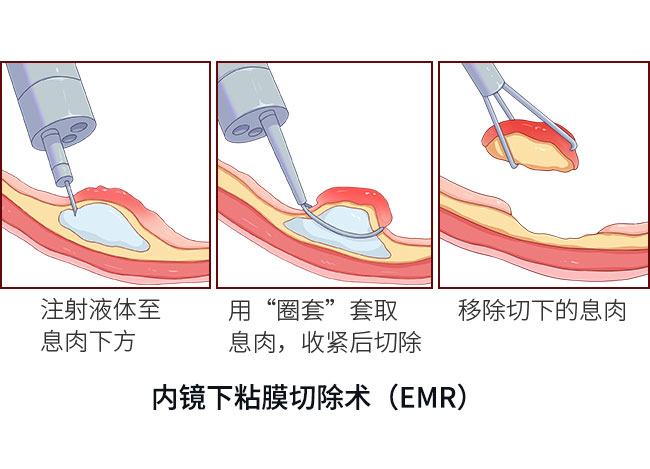
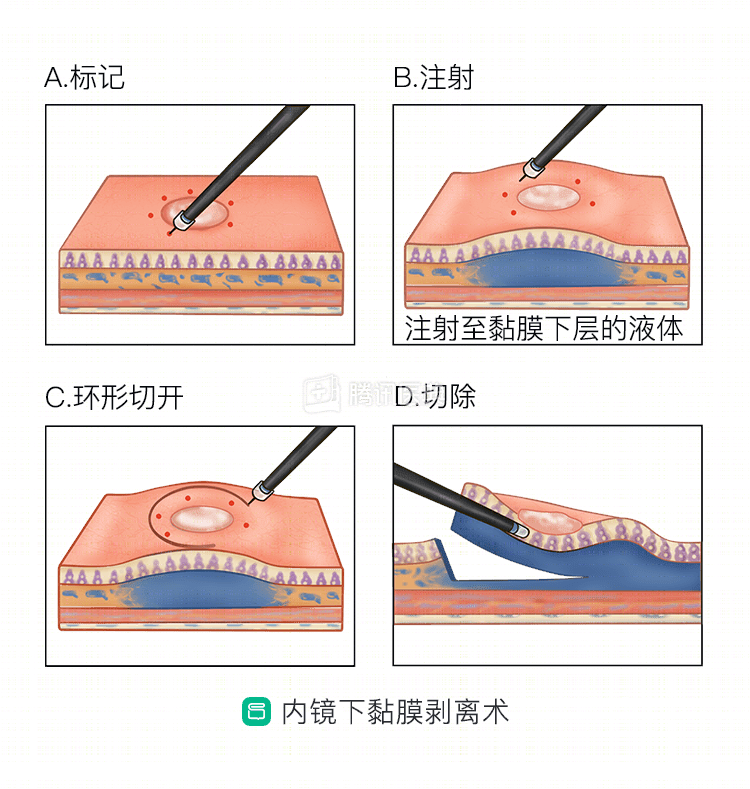
However, in contrast to the “big move” of surgery, some patients wonder whether the endoscopic removal of gastric cancer “without a word” will be unclean and achieve the same curative effect as surgery.
What is the effect of endoscopic resection on the “cure”?
What is the effect of endoscopic resection?
For the gastric cancer lesion itself, endoscopy has a good curative effect. Patients with early gastric cancer who undergo endoscopic resection have about a 6% risk of developing heterochronic gastric cancer after 6 months, which is significantly higher than those who undergo surgery (less than 1%), but most patients can be cured with repeat endoscopic treatment, and there is no significant difference in 5-year survival rates.
From the perspective of lymph node metastasis, the deeper the infiltration of the gastric cancer lesion, the greater the likelihood of lymph node metastasis, usually. Although endoscopy is powerless against lymph node metastasis, gastric cancer that is chosen for endoscopic resection generally invades only the mucosa and submucosa of the gastric wall, and the chance of lymph node metastasis is relatively low, usually 7.8% to 18.3%, so the likelihood of achieving radical cure is still relatively high. In addition, patients will also receive regular postoperative review, and in case of recurrence will promptly undergo complementary radical surgery or repeat endoscopic resection, and survival is generally not affected.
What is the recurrence and survival after endoscopic resection?
Local recurrence rates are slightly higher than surgical procedures
Usually, early gastric cancer is screened for strict indications before endoscopic resection, so the local recurrence rate is low. Although studies do not report identical recurrence rates, they are essentially below 10%, with a slightly higher recurrence rate than after conventional surgery.
5-year survival rates are similar to surgery
Patients with early gastric cancer who undergo endoscopic resection (including performing surgical supplemental radical treatment) have survival rates similar to those of surgery, with 5-year survival rates exceeding 92%. Because of the advantages of less trauma, fewer complications, faster recovery, and lower cost, physicians will consider endoscopic resection as the preferred treatment modality for patients who meet the indications.
Higher chance of recurrent gastric cancer
Studies have reported that the likelihood of another primary gastric cancer (ie, heterochronic gastric cancer that is not a recurrence or metastasis of the current gastric cancer) after endoscopic resection is higher than after surgery, so patients are followed closely after surgery, and cure can still be achieved with a repeat endoscopic procedure or supplemental radical surgery when suspicious lesions are identified.
In conclusion, endoscopic resection as a treatment for early gastric cancer, with comprehensive treatment and regular follow-up, can achieve essentially the same curative effect as conventional surgery, and patients can choose this approach individually under the guidance of their physicians. (Coauthored by Chao Han, Department of Gastrointestinal Oncology, The First Hospital of China Medical University)