
Early diagnosis and treatment of breast cancer has greatly improved outcomes, and circulating tumor cell testing is a great help in early diagnosis and treatment.
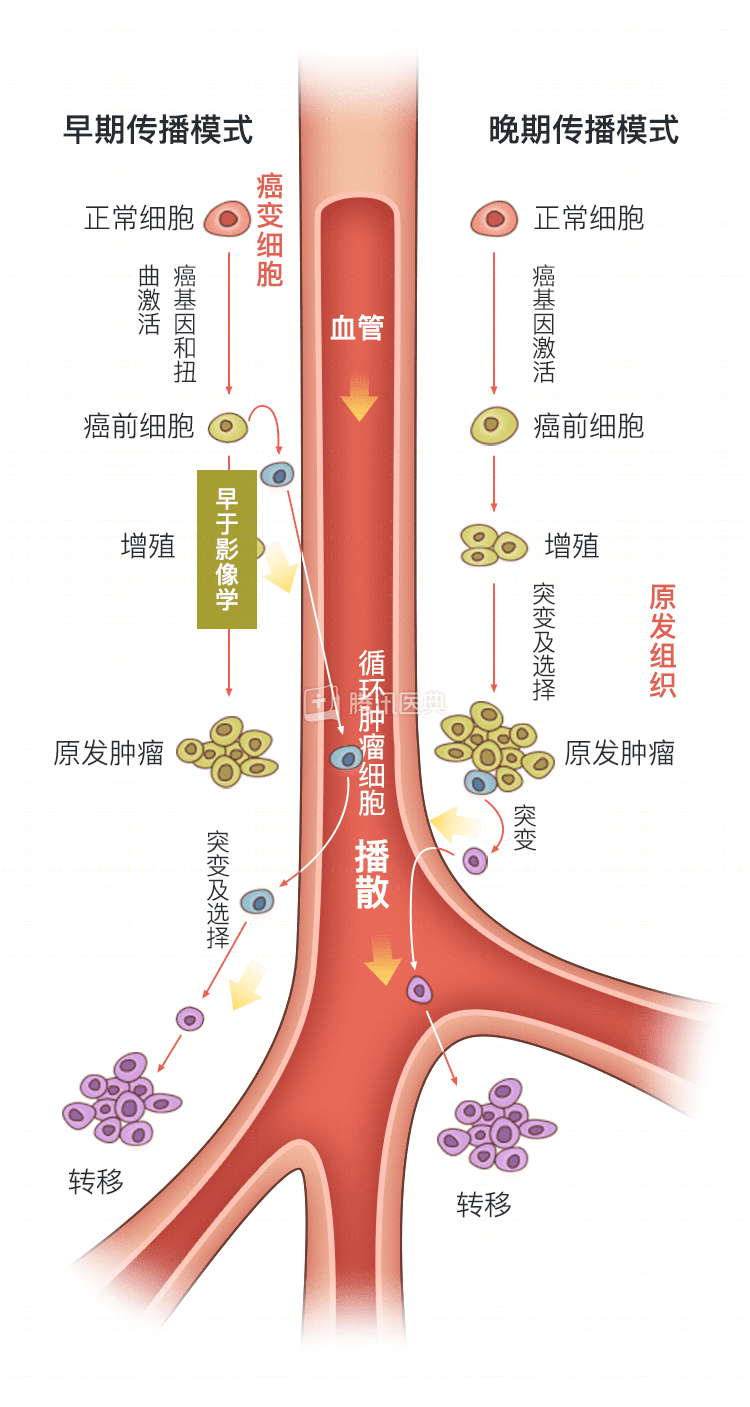
What are circulating tumor cells? The presence of circulating tumor cells indicates that tumor cells have entered the bloodstream, but it does not indicate that the tumor has metastasized. Before the tumor forms metastases, circulating tumor cells still need to go through the following processes: evading the body’s immune system surveillance, overcoming the tumor cells’ own metabolic barriers, overflowing from blood vessels or lymphatic vessels again, and reaching specific organs for colonization. It has been shown that about 1 million tumor cells per gram of tumor tissue enter the bloodstream every day, but most of them die naturally (apoptosis) after entering the bloodstream, and less than 1 in 1,000 cells eventually form distant metastases.
So what role will circulating tumor cell testing play in the diagnosis and treatment of breast cancer?

Predicting outcomes
Circulating tumor cells are an indicator to assess survival, and a higher percentage of patients with positive circulating tumor cells die from breast cancer than those who test negative for circulating tumor cells. The higher the absolute number of circulating tumor cells found, the worse the outcome.
One large study showed that patients with more than 5 circulating tumor cells measured before treatment had a significantly shorter survival than those with fewer than 5 circulating tumor cells; after treatment, those with more than 5 circulating tumor cells measured had a significantly shorter survival and time to tumor progression (ie, disease-free survival) than those with fewer than 5 cells. Thus, circulating tumor cell testing can predict survival and cancer progression in breast cancer patients.
In metastatic breast cancer, circulating tumor cell testing can also predict outcome. In patients with metastatic breast cancer on first-line therapy, those with more than 5 circulating tumor cells had significantly shorter survival and disease-free survival than those with fewer than 5; moreover, disease-free survival and better outcomes were seen when the number of circulating tumor cells decreased, and conversely, shorter survival and worse outcomes were seen when the number continued to increase.
Circulating tumor cell testing is similar to imaging in predicting survival in metastatic breast cancer treated with first-line therapy, and in those treated with second-line or higher therapy, circulating tumor cells can predict survival earlier and more accurately. Moreover, the reproducibility of outcome is poor because imaging test results need to be read manually by physicians, which is subject to human error. In contrast, circulating tumor cell assay is not affected by artificial factors and has good reproducibility. Therefore, circulating tumor cell testing can predict the outcome of metastatic breast cancer earlier and more accurately than imaging.
Predicting Treatment Outcomes
Circulating tumor cell testing may be able to predict treatment outcomes in breast cancer. One study of early-stage breast cancer patients receiving neoadjuvant chemotherapy, in which circulating tumor cells were tested before each treatment, found that tumor response to chemotherapy was associated with a reduction in the number of circulating tumor cells, that the better the response to chemotherapy, the lower the number of circulating tumor cells, and that the reduction in the number of circulating tumor cells after chemotherapy correlated with the size of the tumor determined at the time of final surgery.
This suggests that circulating tumor cells can predict the efficacy of neoadjuvant chemotherapy at an early stage. However, there is a lack of large sample studies of circulating tumor cells to predict the outcome of breast cancer treatment, and their accuracy remains to be explored.
Predicting recurrence
Circulating tumor cell testing can also be considered for predicting recurrence in breast cancer patients. Tumor recurrence is actually the process of tumor metastasis. Now that it is recognized that tumor recurrence and the process of tumor metastasis are directly related, studies have found that the presence of circulating tumor cells in the blood is an important pathway for malignant metastasis.
A treated patient should have no or only a very small number of circulating tumor cells in the body. If a persistent increase in circulating tumor cells is detected during the review process, this indicates that the tumor is likely to recur, and it is important to change the treatment strategy to control the increase in circulating tumor cells and prevent tumor recurrence.
Guiding individualized therapy
Individualized therapy refers to treating a specific tumor patient with a different treatment plan. Usually, physicians determine the treatment plan based on clinical guidelines and the experience of most experts.
Researchers abroad have begun to experiment with a new approach that takes a patient’s tumor cells and cultures them, does pharmacological experiments in vitro, treats the tumor cells with different drugs to see which drug has the greatest killing effect on this specific patient’s tumor cells, and then uses that drug on that patient, which adds purpose to the treatment.
As the technology for capturing circulating tumor cells has matured, people are starting to consider circulating tumor cells as the basis for individualized therapy, capturing circulating tumor cells out in culture for pharmacological assays, on which rapid assessment of drug efficacy can be based.
The detection of circulating tumor cells is like a telescope to observe breast cancer, which is expected to predict the outcome, recurrence, and even the efficacy of breast cancer, and may provide some basis for individualized treatment, which has important implications in the early diagnosis and treatment of breast cancer.