Gleason score
If a prostate-specific antigen (PSA) test or rectal exam suggests possible prostate cancer, your doctor will perform a prostate puncture biopsy to determine if it is prostate cancer.
Under local anesthesia, a thin hollow needle is inserted through the rectal wall and multiple tiny samples of prostate tissue are removed. The procedure takes about 10 minutes and is slightly uncomfortable but not particularly painful for the patient.
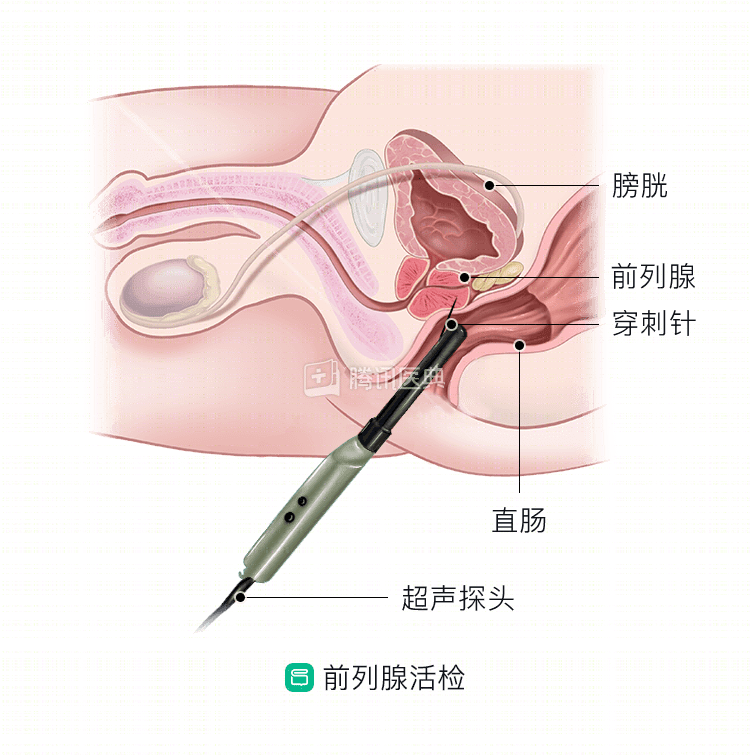
The physician will hand over the tissue sample to the pathologist, who will look at the obtained tissue sample under a microscope. If a tumor is found, it is graded using a Gleason scoring system.
Cancer cells have a different morphology than normal cells, and the more different the morphology, the more aggressive the cancer tends to be.
The Gleason scoring system grades the most common (major) and second most common (minor) cell morphology found in tissue samples on a scale of 1 to 5:
- Grade 1: The tissue looks very much like a normal prostate alveolar-like structure.
- Grade 2 to 4.
- Grades 2 to 4: Cells with lower scores look closer to normal and represent less aggressive; cells with higher scores are more different from normal cells and usually grow more rapidly.
- Grade 5: Most cells are very different from normal cells in morphology.
The doctor adds up the major and minor cell morphology scores to get a total Gleason score (2 to 10) to determine how aggressive the cancer is. a Gleason score of no more than 6 is a well-differentiated tumor, indicating a low-grade cancer; a score of 7 is an intermediate grade cancer, which is moderately malignant; and a score of 8 to 10 is a high-grade cancer, which is more malignant.
In general, the higher the Gleason score, the more aggressive the tumor cells are, meaning the tumor is more likely to spread and metastasize and the patient’s disease progresses more quickly. The doctor will develop the best treatment plan for the patient based on the tumor grade as well as the stage.
Prostate cancer staging
While tumor grading can determine how aggressive the cancer is, staging can help determine how far the cancer has progressed so far. Most doctors use the TNM staging system.
TNM staging system
- T (tumor): represents the localized condition of the primary tumor. The extent of the primary tumor depends on its size and location; if the tumor cannot be evaluated, the staging is TX; if no tumor is found, the staging is T0; as the tumor increases in size and spread, the staging increases accordingly – T1, T2, T3, or T4, and sometimes further subdivided into T1a or T1b.
- N (lymph nodes): represents whether the tumor has spread to the lymph nodes near the bladder. Staging is NX if the lymph nodes cannot be evaluated, N0 if they have not spread to the lymph nodes, or N1 if they have spread to the lymph nodes.
- M (metastasis): represents whether the tumor has spread to the lymph nodes near the bladder.
- M (metastasis): represents tumors that have metastasized to bone or other organs (M1) or have not metastasized (M0). Sometimes M1a is used to indicate distant lymph node metastases, M1b for bone metastases, and M1c for metastases to other sites.
Physicians combine the results of the T, N, and M assessments with the Gleason score (tumor grading) and the results of the PSA test to determine the clinical stage of the tumor. The different stages are represented by Roman numerals, with stage I representing the least progressive tumor and stage IV representing the most progressive tumor, and treatment is based on the stage results.
Stage I
Stage I

- Prostate cancer is growing, but has not yet spread.
- In most cases, the tumor is not felt through rectal fingerprints or is not visible on imaging.
- Gleason score of less than 6 and PSA level of less than 10.
- Tumor is confined to a single lobe of the prostate and is less than half the extent of the single lobe.
Stage IIA
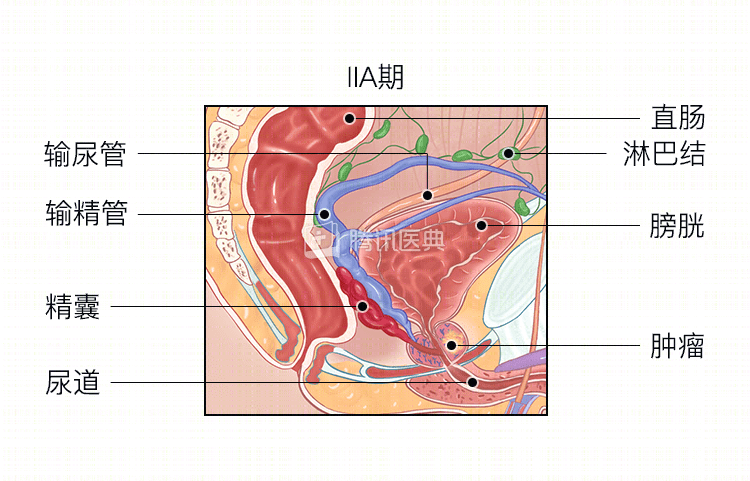
- Prostate cancer is growing, but has not yet spread.
- The tumor cannot be felt on rectal exam or seen on imaging.
- The tumor is more than half the extent of a single lobe of the prostate, but has not invaded both lobes.
- Gleason score less than 7 and PSA level less than 20.
Stage IIB
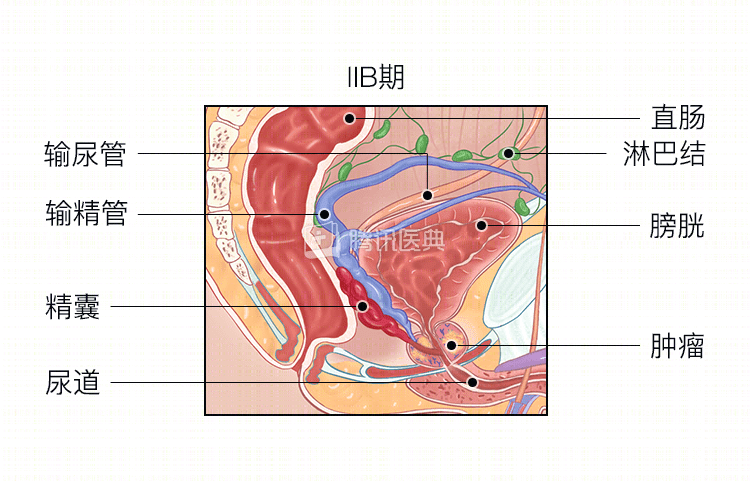
- Prostate cancer is growing, but has not yet spread.
- The tumor cannot be felt on rectal exam or seen on imaging.
- The tumor may invade a single lobe or both lobes of the prostate.
- The Gleason score and PSA level may be any value.
- The tumor has spread outside the prostate, but has not invaded the lymph nodes or other parts of the body.
- The Gleason score and PSA level can be any value.
- The Gleason score and PSA level can be any value.
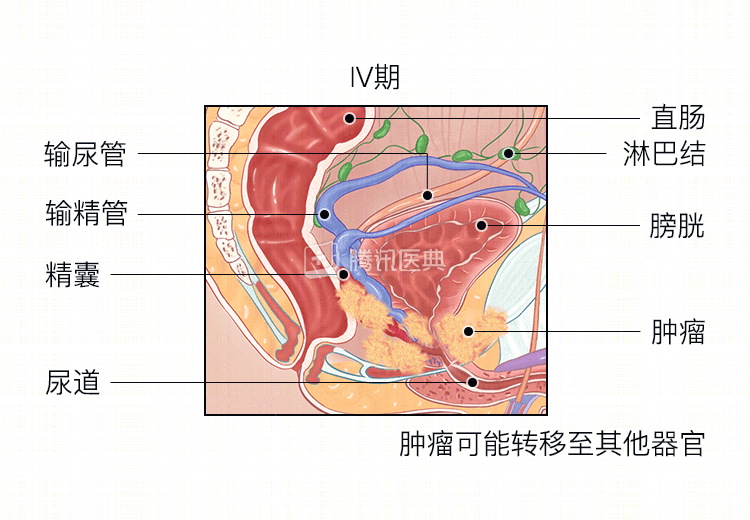
- The tumor has spread to tissues other than the prostate – usually to the lymph nodes, bones, liver, or lungs.
- The Gleason score and PSA level can be any value.
Stage III
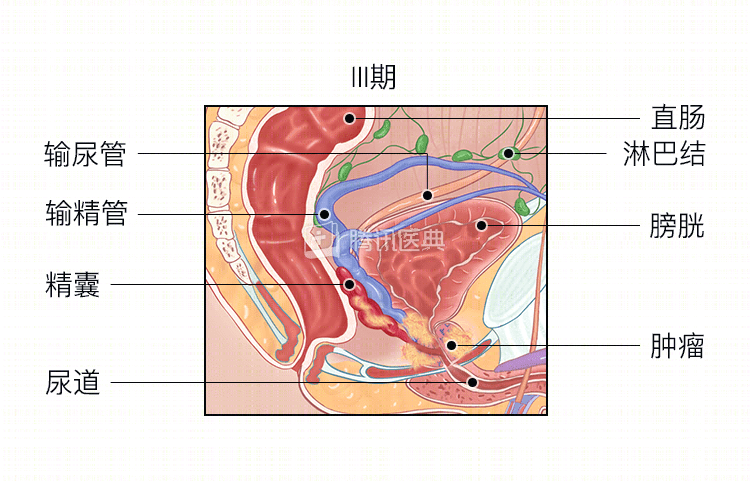
Stage IV