
Some women go to the hospital for what is supposed to be a mammogram and find no abnormality in the breast, but a swelling in the armpit. What should I do if I encounter this situation? The following is a discussion of armpit swellings.
Are axillary lymph nodes associated with breast cancer?
The term “lymph node metastasis” is not new to many people with cancer. The lymph nodes in the armpit are the “good partners” of breast cancer, which means that the most likely and first lymph node metastasis in breast cancer is the axillary lymph node metastasis. The first thing you need to do is to get a good idea of what you want to do.
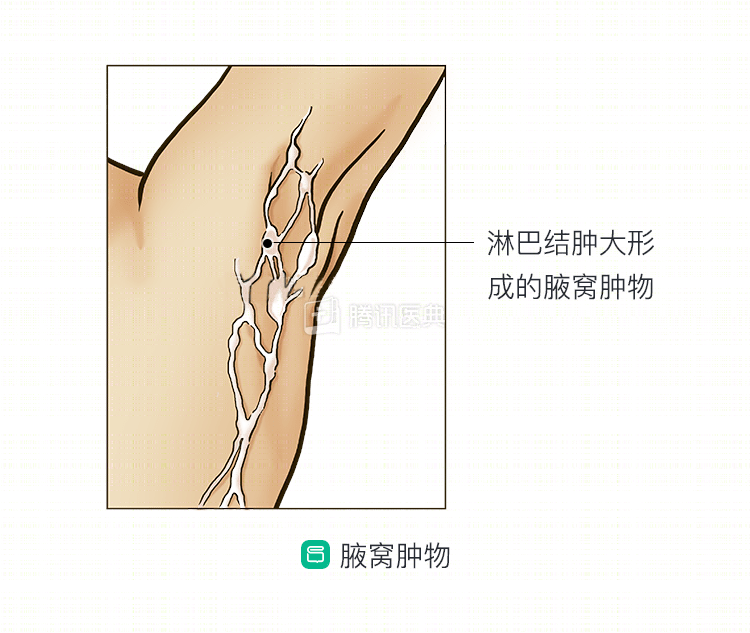
Given the close relationship between breast cancer and axillary lymph nodes, breast cancer cannot be easily ruled out in cases where no definite lesion is found in the breast but an axillary mass is found. This requires the introduction of a concept, “occult breast cancer.
Occult breast cancer is a rare and specific type of breast cancer that usually presents with axillary lymph node metastases or other distant metastases, but no lump is felt on examination and imaging (ultrasound, x-ray, etc.) is inconclusive. The diagnosis of this type of breast cancer is based on histopathological biopsy of the enlarged lymph nodes. If the diagnosis is clear, the same treatment is required as for breast cancer.
Therefore, if there is no clear lesion in the breast on examination, but there is a swelling in the axilla, further consultation should be done immediately, and it should not be assumed that the absence of abnormalities in the breast is not related to breast cancer.
What other diseases could the axillary swelling be?
Of course, not all armpit swellings are breast cancer. The armpit consists mainly of superficial sebaceous glands, sweat glands, and deep adipose lymphatic tissue, with some blood vessels and nerves traveling through it. The occurrence of axillary masses is closely related to their structure. Common axillary masses include the following conditions.
- Tumor. Tumors account for a large proportion of axillary swellings and are the most common conditions of concern. In addition to the aforementioned occult breast cancer and lymph node metastases from conventional breast cancer, there are a number of other benign and malignant tumors. Among them, the more common benign tumors include lipoma, nerve sheath tumor, and parametrial fibroadenoma. While malignant tumors are less common but more alarming, the more common ones include malignant lymphoma, liposarcoma, and lymph node metastasis from various malignant tumors (including melanoma, uterine cancer, esophageal cancer, lung cancer, and liver cancer).
- Inflammation. The most common of the non-tumor diseases is inflammation, of which axillary lymphadenitis is more common. Infections such as bacteria and viruses can cause lymph node enlargement with typical inflammatory manifestations such as redness, swelling, heat, and pain.
- Paronychia. Paronychia is not uncommon in the Asian population, with an incidence of 1% to 5%, 95% of which occur in the axilla, and usually requires no special treatment. If a mass is found in the parametrium, the same principles of management apply as for normal breast masses.
- Other. Vaccinations, medications, etc. may also cause reactive enlargement of the lymph nodes.
What should I do if I find a swelling in my armpit?
Don’t panic if you find an axillary swelling. Carefully recalling valid information about your recent health and lifestyle, and visiting the hospital promptly to give your doctor accurate information about it will help get the most timely and accurate diagnosis and treatment.
In conclusion, axillary swelling may be a benign tumor, malignant tumor or lymph node metastasis of a malignant tumor, or it may be inflammation, paronychia, etc. The first thing you should do is to go to the hospital immediately and get medical attention.