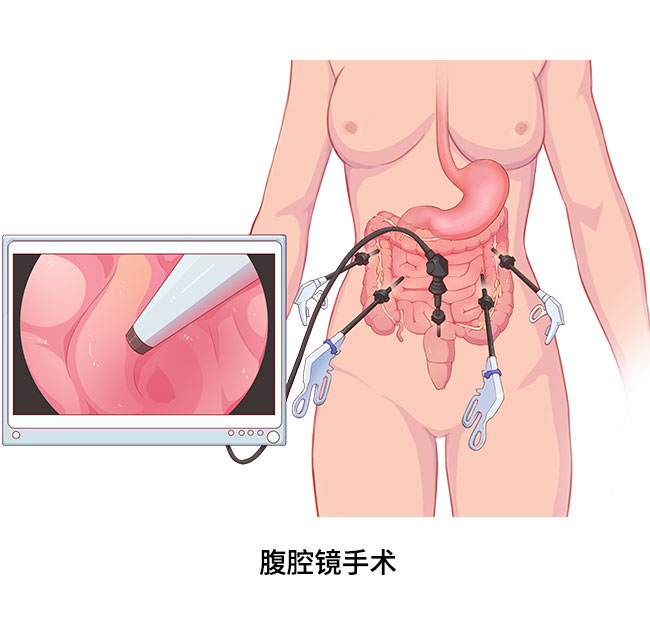
In recent years, minimally invasive techniques, represented by laparoscopic surgery, have become a hot spot in the surgical treatment of gastric cancer. Laparoscopic surgery has the advantages of less trauma, faster postoperative recovery and shorter hospital stay. So, how does laparoscopic surgery compare with traditional open surgery?
Korean study: comparable efficacy in early gastric cancer, progressive gastric cancer remains to be proven
The KLASS-01 study in the Korean population compared the results of laparoscopic versus open surgery for distal gastrectomy in patients with early gastric cancer. The results showed no significant difference in outcomes, with 5-year survival rates of 95.8% and 95.9% for patients undergoing laparoscopic and open surgery, respectively, and 5-year recurrence-free survival rates of 92.5% and 94.3%, respectively. From this study, it is clear that laparoscopic and open surgery have comparable effects on survival and recurrence risk in early gastric cancer.
Another Korean study, KLASS-02, compared the role of laparoscopic versus open surgery for distal gastrectomy in locally progressive gastric cancer. The results showed that laparoscopic surgery had significant advantages over open surgery in terms of intraoperative bleeding, complications within 30 days after surgery, recovery of bowel function after surgery, painful conditions, and mean length of hospital stay, and was comparable to open surgery in terms of number of lymph nodes dissected, length of margins, and postoperative mortality. This suggests that laparoscopic surgery in progressive gastric cancer is as safe as open surgery and has some advantages in terms of complication rate and rapid recovery. However, the study was still not completed to observe the 3-year recurrence-free survival rate. Therefore, the efficacy of laparoscopic distal gastrectomy in the treatment of locally progressive gastric cancer remains unclear, and the results are to be expected.
Chinese study: laparoscopic surgery emerging as an advantage in progressive gastric cancer
In recent years, China has seen rapid development in laparoscopic treatment of gastric cancer, reaching international standards in terms of scale of implementation and surgical techniques. Our CLASS-01 study initially showed that for progressive gastric cancer, laparoscopic surgery has advantages over open surgery in terms of intraoperative bleeding, time to first meal, time to bed mobility, time to first gas, and average hospital stay, with no significant differences in complication rates or postoperative mortality. The results of this study suggest that laparoscopic surgery is not significantly different from open surgery in terms of safety and is superior in terms of intraoperative bleeding and early postoperative recovery. However, follow-up of this study has not been completed, and long-term outcomes remain promising.
In China, a series of studies comparing laparoscopic surgery with open surgery for gastric cancer, such as the CLASS-02, CLASS-03a, CLASS04, and CLASS05 studies, have been conducted, and it is believed that these findings will shed light on the development of minimally invasive treatment for gastric cancer in China in the future.
Summary
In summary, laparoscopic surgery is comparable to open surgery in terms of near-term efficacy and safety in the treatment of early-stage and progressive gastric cancer, and has more advantages in terms of bleeding and early recovery. Although the long-term efficacy of laparoscopic surgery remains to be proven, some studies have confirmed that its long-term efficacy is comparable to that of open surgery. Therefore, the future of laparoscopic surgery for gastric cancer is worth looking forward to. Patients with gastric cancer may consider having laparoscopic surgery performed by experienced surgeons in a standardized medical center. (Contributed by Pengliang Wang, Department of Gastrointestinal Oncology, The First Hospital of China Medical University)