When you first come to the hospital with a suspicion of esophageal cancer, you will often be asked to have several tubes of blood drawn, including a purple tube, a light yellow tube, a light blue tube, and a red tube. You may wonder why separate tubes of blood are needed. What is the test for? Do you have to do it? We’ll answer all of your questions next.
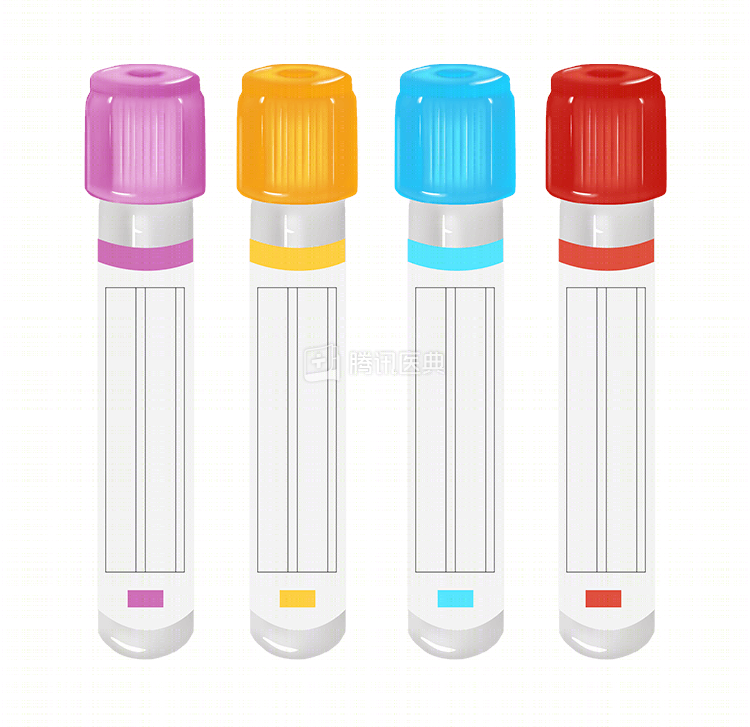
What are the tests that need to be done and why do they need to be done?
In general, hematology tests include routine blood work, coagulation, liver and kidney function, infection screening, tumor markers, and more.
Hematology routine (purple tube)
Tests include white blood cells, red blood cells, hemoglobin, and platelet count. The white blood cells in turn include neutrophils, eosinophils, basophils, lymphocytes, etc.
Means of the test:
- White blood cell counts can determine if you have an infection occurring in your body;
- Red blood cell count and hemoglobin measurement can determine if anemia is present;
- Platelet count to determine if there are any problems with clotting.
Blood tests can detect early signs of many systemic diseases, such as anemia, hematologic disorders, and bone marrow hematopoiesis.
Coagulation (light blue tube)
Assays include prothrombin time (PT), international normalized ratio (INR), activated partial thromboplastin time (APTT) The following are the results of the study: Fibrinogen, Fibrinogen (FIB), and thrombin time (TT).
Significance of the test: Coagulation testing is the basic test to assess coagulation. Especially before gastroscopy or pathology biopsy, coagulation may reduce the risk of major bleeding during esophageal cancer surgery.
Liver and kidney function (light yellow tube)
1. Liver function
Tests include transaminases (glutamate ALT and glutathione AST), gamma glutamyl transpeptidase (GGT), alkaline phosphatase (ALP), bilirubin, and plasma proteins.
Significance of the test: Abnormalities in the above indicators are mainly indicative of impaired liver function, such as various hepatitis, cirrhosis, obstructive jaundice, biliary tract infection, or liver cancer.
2. Kidney function
Tests: mainly include urea nitrogen (BUN) and creatinine (CREA).
Test significance: Creatinine and urea nitrogen are commonly used to assess renal function, and elevated levels are mainly seen in renal insufficiency, suggesting possible kidney disease.
It is worth noting that liver and kidney function tests are often performed before surgery, chemotherapy, or radiation therapy for esophageal cancer to determine whether your vital organs are functioning well and can tolerate the possible side effects of treatment.
Infection screening (red or light yellow tube)
1. Hepatitis Screening (red tube)
Test: Hepatitis B five (hepatitis B virus surface antigen, hepatitis B virus surface antibody, hepatitis B virus e antigen, hepatitis B virus e antibody, hepatitis B virus core antibody), hepatitis A virus IgM antibody, and hepatitis C virus antibody.
2. Syphilis + HIV screening (light yellow tube)
Test: Syphilis spirochete antibodies and HIV (type 1+2) antibodies.
Test significance: Infection screening is mandatory for invasive procedures such as gastroscopy, and before surgery to prevent the spread of infectious diseases.
Tumor markers (red tube)
Tumor markers are a class of biochemical substances produced by tumor tissue itself that reflect its presence and growth. The main ones are embryonic antigens, glycoantigens, natural autoantigens, cytokeratins, tumor-associated enzymes, hormones, and certain oncogenes.
Testing content: There are no more specific tumor markers for esophageal cancer. In clinical practice, methemoglobin (AFP), serum carcinoembryonic antigen (CEA), glycoconjugate antigen 125 (CA125), glycoconjugate antigen 19-9 (CA19-9), and ferritin are usually chosen as testing indicators.
Significance of the test: Significantly abnormal levels of the above markers may indicate the presence of a tumor and are valuable for screening, efficacy, and prognostic evaluation of esophageal cancer.
Do I need to fast during the test?
Liver function tests require fasting, and if you are scheduled to be seen in the morning, you will need to fast after 10 pm the night before. Routine blood work, coagulation, renal function, electrolytes, infection screening, and tumor marker testing do not require fasting.
Does the blood test have any effect on the body?
The volume of blood drawn for each hematology test is typically 3-5 mL and has no effect on body function.