Erectile dysfunction, commonly known as impotence, is the inability to produce or maintain an erection to satisfy sexual intercourse. Although prostate cancer is not a cause of erectile dysfunction, treatment of this disease can cause erectile dysfunction, such as prostatectomy, radiation therapy, and endocrine therapy.
Surgery
Surgical removal of the prostate (radical prostatectomy for prostate cancer) usually results in some degree of erectile dysfunction immediately after surgery, even with a nerve-preserving prostatectomy. The severity of erectile dysfunction depends on the type of surgery, the stage of the cancer, and the skill level of the surgeon.
If nerve-preserving surgery is taken, then the patient is likely to regain erectile function within the first two years after surgery. However, it is also possible for patients who have had a nerve-preserving prostatectomy to achieve a normal erection.
Vacuum erection devices or medications for erectile dysfunction can improve the quality of erections and can accelerate the return of normal sexual function.
If an erection can be accomplished after surgery, it also means that orgasm can be achieved. However, the orgasm may be a “dry” orgasm, meaning that there is only a minimal amount of ejaculation. Most patients will be infertile, and since most prostate cancer patients are older men, this may not be a concern.
Radiotherapy
Radiotherapy can also cause erectile dysfunction, and it usually starts 6 months after treatment.
Erectile dysfunction is the most common long-term complication of radiotherapy. However, its incidence is reduced when more complex treatments such as radioactive particle implants (brachytherapy), intensity-modulated radiotherapy (IMRT), or 3-D conformal radiotherapy are used.
Endocrine therapy
Erectile dysfunction and decreased libido may occur 2 to 4 weeks after endocrine therapy, due to medications that lower testosterone levels.
How is erectile dysfunction treated?
For men who have been treated for prostate cancer, the following options are now available to treat erectile dysfunction:
- Oral medications such as tadalafil, vardenafil, avanafil, or sildenafil
- Intracavernosal penile injection therapy
- Vacuum erection device
- Prostatil urethral suppository
- Penile prosthesis implant surgery
Oral medications
- After surgery, erectile function is restored in 70% of patients who undergo bilateral nerve preservation with one or more oral medications for erectile dysfunction. For those patients with unilateral nerve preservation or no nerve preservation, oral medications are less effective.
- After radiation therapy, overall about 50% to 60% of men can regain erectile function with medications.
- Endocrine therapy. Men who receive endocrine therapy respond poorly to any treatment for erectile dysfunction.
Penile injection therapy
If oral erectile dysfunction medications are not effective, then penile injections may be an effective treatment for patients who have already undergone surgery or radiation therapy, either external particle beam or particle implantation.
Overall, up to 80% of men can regain erectile capacity with injection therapy. The main side effects are occasional pain and the development of scar tissue.
Other therapies
If neither oral medications nor penile injection therapy work (or if the patient is unwilling or unable to use either therapy), other therapies may be considered. These include:
- Vacuum erection device. A vacuum tube is placed over the penis to pull the air out of the tube, which will encourage blood to flow into the penis and cause an erection. An erection can be maintained by removing the constriction ring at the root of the vacuum tube and placing it over the base of the penis, and the constriction ring can last up to 30 minutes. However, for patients who have undergone surgical treatment, the results are usually less satisfactory. Many patients do not like the use of a reduction ring at the base of the penis and find it uncomfortable.
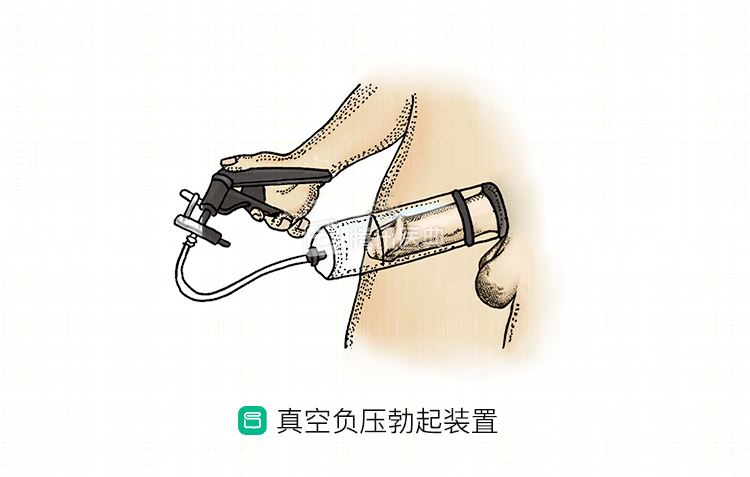
- Prostilbestrol urethral suppositories. The suppository is placed into the urethra using a plastic applicator. The suppository contains the drug Prostil, which flows into the corpus cavernosum of the penis, where Prostil relaxes the muscles in the corpus cavernosum and encourages blood flow into the penis.
- Penile prosthesis implant surgery. Penile prosthesis implant surgery may be considered if a patient has had erectile dysfunction for about a year after cancer treatment and the above treatments have not worked or non-surgical treatments are not available. For many men, an implant or prosthesis is an effective treatment, but it does require a single surgical procedure to insert the implant into the penis. The surgery can lead to problems such as mechanical failure or infection, and the prosthesis may need to be removed and reoperated. However, most men and their partners are very satisfied with the results of penile implants.
