Radical prostatectomy, a procedure to remove the prostate and its surrounding tissues, usually includes the seminal vesicles and some adjacent lymph nodes.
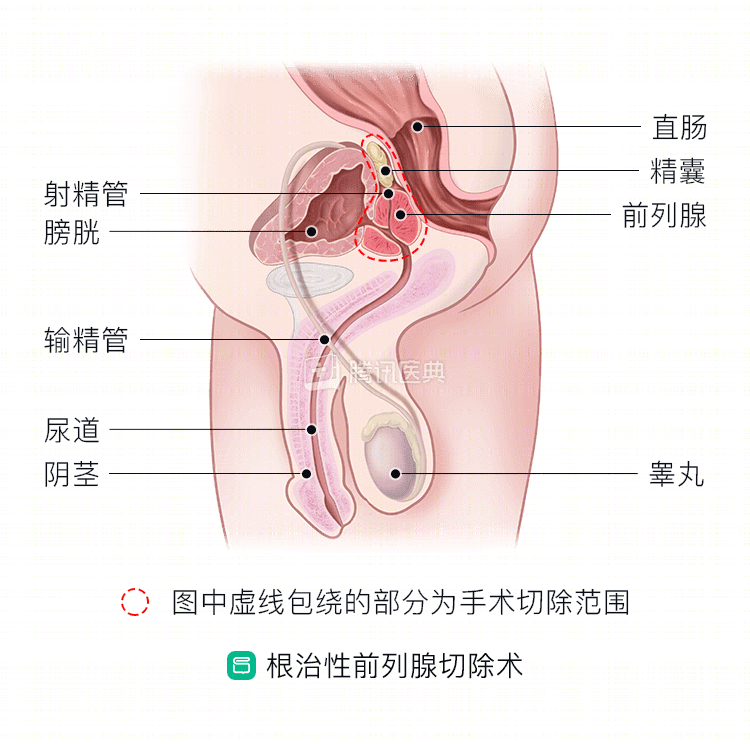
The traditional view is that radical prostatectomy is indicated for patients whose tumors are confined to the prostate (have not spread). As medical research progresses, there is increasing evidence to support the use of radical prostatectomy for patients with locally progressive prostate cancer after neoadjuvant therapy and for patients with oligometastatic prostate cancer, but this decision needs to be made with great caution.
Population
Male patients with tumors confined to the interior of the prostate, less than 75 years of age, and a life expectancy of 10 years or more are best suited to undergo radical prostatectomy.
Before performing a radical prostatectomy, the surgeon first needs to be sure that the tumor has not spread outside the prostate. The risk of metastatic spread of the tumor can be determined by the results of biopsy and PSA levels. Further tests are also done if necessary, including CT scans, bone scans, MRI scans, and ultrasounds.
If the prostate cancer has not spread, your doctor may recommend preferred nonsurgical treatment, including radiation therapy, endocrine therapy, or watchful waiting, as many prostate cancers grow slowly and do not require treatment. Depending on the degree of risk of cancer spread, pelvic lymph node dissection may also be considered.
Common procedures
The prostate is located below the bladder and in front of the rectum. In radical prostatectomy, there are two different approaches to prostate removal, a traditional open procedure and a new minimally invasive procedure: laparoscopic prostatectomy (laparoscopic surgery) and robot-assisted laparoscopic prostatectomy (robotic surgery).
-
Open surgery
In this traditional open prostatectomy, the surgeon makes a vertical, 8-15 cm long incision under the patient’s belly button through which the prostate is removed. An incision in the perineum (located between the scrotum and anus) is not usually chosen.
Laparoscopic surgery
In laparoscopic prostatectomy, the surgeon makes several small incisions in the patient’s abdomen and inserts surgical instruments and a camera through the incisions to perform a radical prostatectomy outside the body. The surgeon can view the entire procedure on the screen.
-
Robotic surgery
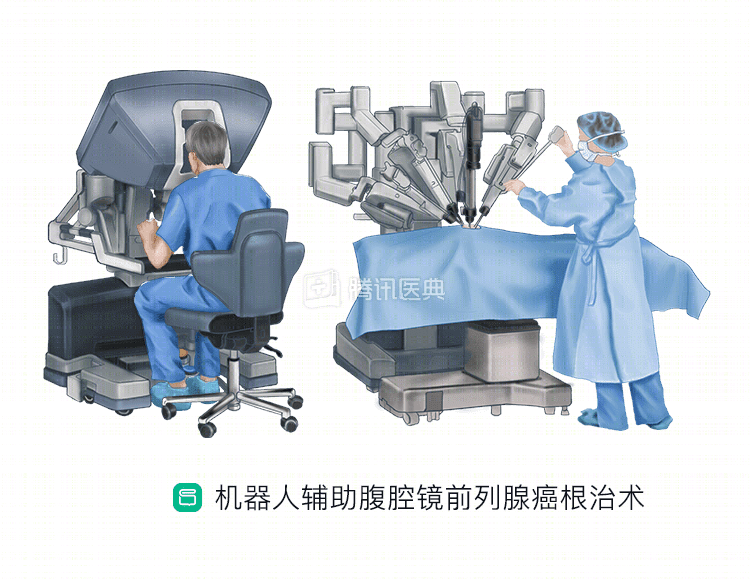
In robotic prostatectomy, the surgeon makes a small incision in the patient’s abdomen, similar to a conventional laparoscopic prostatectomy, where the surgeon controls an advanced mechanical surgical system outside the patient’s abdomen and the laparoscope transmits a three-dimensional, high-definition image of the patient’s abdomen, which the surgeon can freely manipulate while looking at the mirror image.
Postoperative considerations
Most patients will need to stay in the hospital for 1 to 3 days postoperatively. Patients will need to have a catheter inserted during the procedure, and some patients will need to have a catheter in place for several days or even weeks after discharge; another type of percutaneously placed drainage tube may also need to be kept in place for several days after going home.
Postoperative pain can be managed with pain medication, while urinary and sexual function may take weeks or months to return to normal. Early postoperative rehabilitation exercises can be helpful in restoring urinary control and sexual function.
Another thing to keep in mind is that after radical prostatectomy, regular follow-up is key to preventing cancer recurrence.
Does removing the prostate equal a cure?
For patients with prostate cancer that is confined to the prostate area and has not spread, undergoing prostatectomy can lead to a cure.
The surgically removed prostate is examined under a microscope to determine if the tumor has invaded the margins of the prostate. If so, it is likely that the prostate cancer has spread, in which case further treatment is needed.
Patients with prostate cancer that does not show signs of metastatic tumor spread have an 85% chance of surviving more than 10 years after radical prostatectomy.
Related articles: