What is liver palm?
.
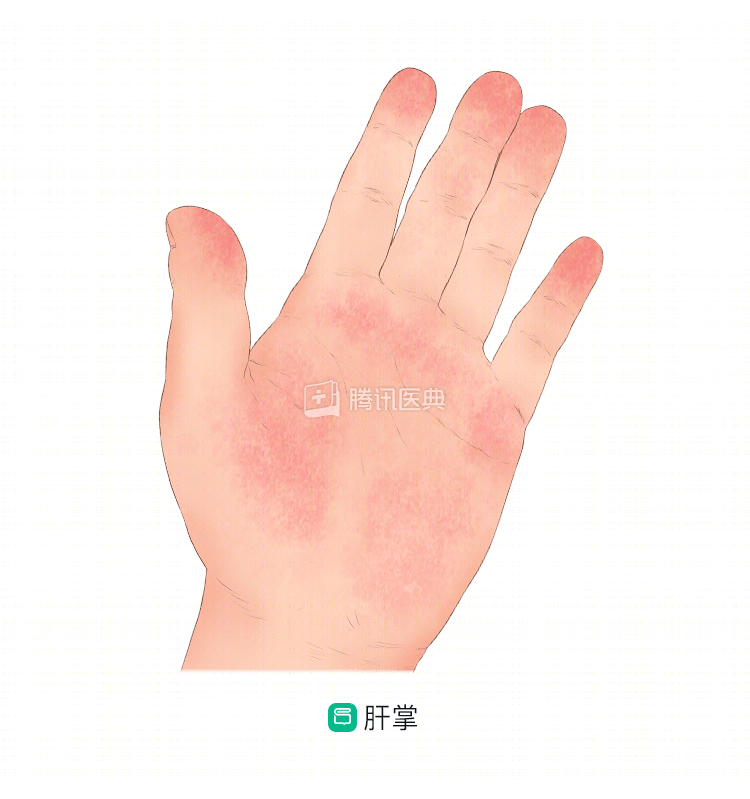
Two bulging muscles can be seen in the palm area at the base of the thumb and little finger, called the greater and lesser interphalangeal muscles.
If the skin on the surface of the greater and lesser interphalangeal muscles is flaky and congested or has red spots or patches that fade after pressure is applied and become red again after the pressure is removed, while the palm is normal in color, it is called “liver palm”.
What is a spider nevus?
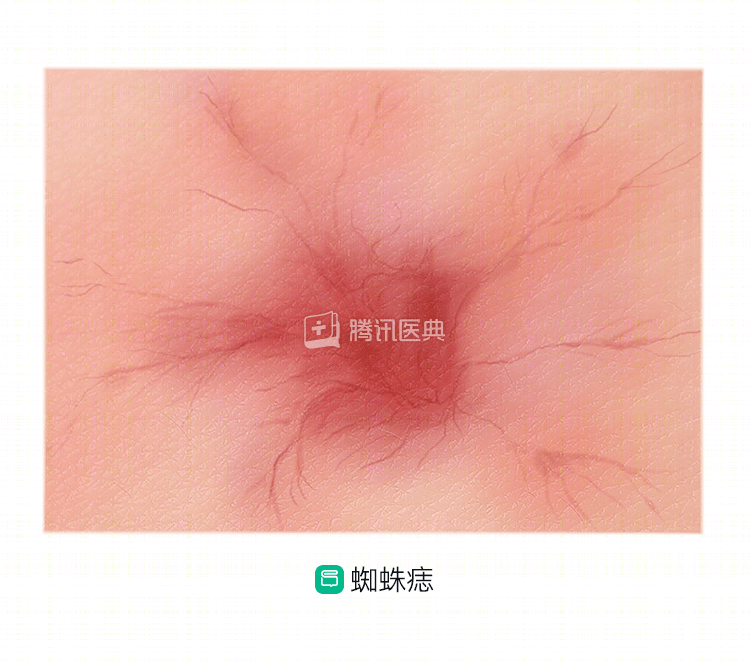
This is a vascular nevus formed by the dilated ends of small arterial branches in the skin. The nevus has a central point surrounded by a network of small radial vessels that resembles a spider, hence the name “spider nevus.
When the center of a spider nevus is compressed with a cotton swab or matchstick, the small radial vascular network disappears immediately and reappears after the pressure is removed. They vary in size from 1.5 cm or more in diameter in large ones to small ones like the cap of a large head of a needle, and appear in areas where the superior vena cava is distributed, such as the face, neck, back of the hand, upper arm, forehead, and shoulders.
Who can develop liver palms and spider nevi?
Hepatic palms and spider nevi are among the clinical signs in patients with chronic hepatitis and cirrhosis. In acute or chronic hepatitis or cirrhosis, liver function is impaired, when the inactivation of estrogen by the liver decreases, resulting in higher levels of estrogen in the blood, which stimulates small arterial capillaries to become congested and dilated, resulting in liver palms and spider nevi over time.
Liver palms can also occur in people with rheumatoid arthritis, malnutrition, chronic alcohol consumption, and even healthy people. 10% to 15% of normal people (e.g., children aged 6 to 10 years and young women) develop spider nevi; they are more common in pregnant women, with about 40% of healthy pregnant women having spider nevi that tend to resolve on their own within 6 weeks after delivery.
How is liver cancer associated with liver palms and spider nevi?
Why are some primary liver cancers associated with liver palms and spider nevi?
Why do some people with primary liver cancer also have liver palms and spider nevi?
This is because most primary liver cancers in China occur on top of hepatitis B and cirrhosis. The liver palms and spider nevi that appear in many liver cancer patients are actually caused by chronic hepatitis and cirrhosis.
So, liver palms and spider moles are not a sign of liver cancer, but it is important to be alert for the development of chronic hepatitis or cirrhosis and to actively look for related causes or triggers.
If you have chronic hepatitis or cirrhosis, you should be screened regularly for liver cancer to determine if it has occurred.