Arterial perfusion chemotherapy is a form of local chemotherapy in which chemotherapeutic agents are injected into the arteries feeding the tumor after precise localization of the tumor using imaging guidance. What is the role of this chemotherapy and in what situations is it used? This article will take you through it.
What is the purpose of arterial infusion chemotherapy?
Arterial perfusion injects chemotherapy directly into the arteries that feed tumor growth. The goal is to increase local chemotherapy drug concentrations in the tumor and decrease systemic drug concentrations, thereby increasing the antitumor effect of chemotherapy drugs while reducing systemic side effects from chemotherapy drugs.
Which patients need to receive arterial infusion chemotherapy?
Arterial infusion chemotherapy is indicated for the palliative treatment of patients with inoperable gastric cancer, and patients who are temporarily inoperable may have their tumors converted to operable with infusion chemotherapy. In surgical patients, even if they undergo radical resection, microscopic lesions or microscopic intravascular cancer thrombi may remain postoperatively, so physicians may also consider prophylactic chemotherapy after surgical resection to prevent local recurrence. Physicians may consider arterial infusion chemotherapy if they assess that the patient may have little success with systemic chemotherapy, have high side effects, or be in poor health to tolerate it.
Arterial infusion chemotherapy is usually contraindicated in the following conditions: old age and malignancy; severe coagulation disorders; major organ dysfunction; gastric cancer with a tendency to bleed or perforate; fever with infection; and allergy to contrast media. Other than that, arterial perfusion chemotherapy may be considered by physicians for those who are physically able to tolerate it.
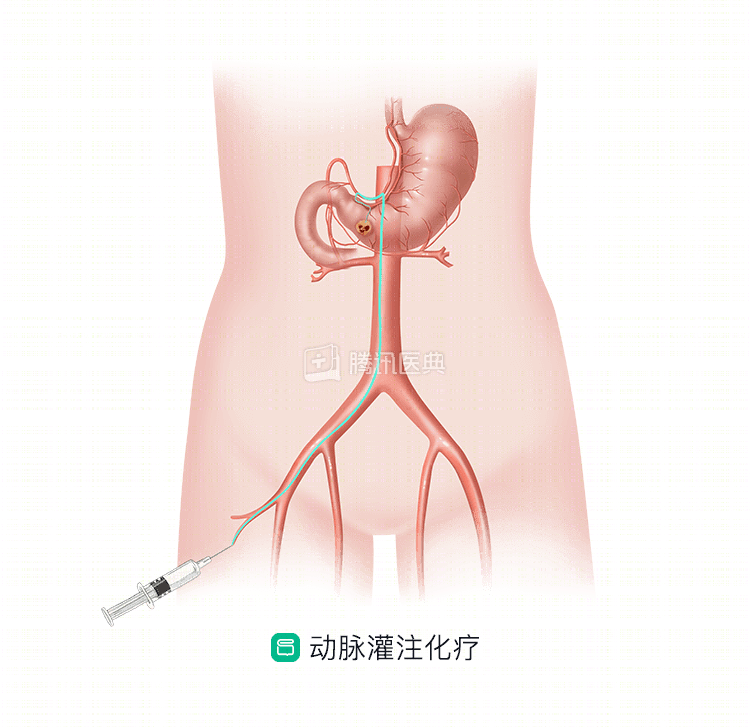
How is arterial infusion chemotherapy administered?
Arterial infusion chemotherapy is usually done under local anesthesia. The doctor first uses imaging, such as x-ray fluoroscopy, to get a precise picture of the nature, size, blood supply, and collateral circulation of the gastric cancer lesion. Then, a rice-sized incision is made in the skin at the root of the thigh (femoral artery) or near the elbow fossa (brachial artery), a blood vessel is located through the skin incision, and a catheter is inserted into the vessel and followed to the artery that feeds the tumor growth. A common chemotherapy drug is injected into the catheter, and the drug reaches the tumor. This procedure usually takes 30 minutes and is usually mild and well tolerated by most patients, except for some discomfort such as dull pain in the upper abdomen, nausea and vomiting caused by the chemotherapy drugs. The puncture site usually requires pressure bandaging for 12-24 hours after treatment. To prevent gastrointestinal reactions doctors usually give antiemetic medication and antibiotics for 3-5 days to prevent infection. Those treated with cisplatin are given adequate hydration (mainly by infusion).
There is no standard for the timing of arterial infusion chemotherapy and the time between procedures. The surgeon usually gives 3 to 4 cycles of preoperative arterial infusion chemotherapy based on clinical experience, followed by 1 month of recovery before surgery.
What are the advantages and disadvantages of arterial infusion chemotherapy?
Benefits
- The incision is only 2 mm.
- The incision is only 2 mm in size, which is less invasive and less painful for the patient.
- The treatment time is very short.
- The treatment time is very short, usually within 30 minutes.
- Faster recovery after treatment for patients with poor health and older age.
- High local concentration of chemotherapy drugs in the tumor and low systemic concentration, better local control of the tumor with fewer side effects and less drug resistance.
- Precisely positioned, precise treatment, directly injecting drugs into the target site.
- Local anesthesia is used, which is safer.
Inadequate
- It is an invasive operation and is not suitable for patients with severe infection, bleeding tendency and inability to cooperate.
- The operation requires a certain level of skill and is demanding on the physician.
- It is contraindicated in patients with gastric cancer who have a tendency to have serious complications, such as gastric ulcer with gastric bleeding and gastric perforation.
- Tumors that are adjacent to vital organs are prone to hemorrhage.
Arterial perfusion chemotherapy has been recognized by the medical community and is gradually being promoted in oncology treatment. However, in China, there are still few hospitals that are able to perform this treatment, and there is a lack of standardized protocols and practices for treatment based on tumor size, nature, and location. Therefore, there is still a long way to go before arterial infusion chemotherapy becomes popular in gastric cancer. (Contributed by Xin Wang, Department of Gastrointestinal Oncology, The First Hospital of China Medical University)