Ultrasound endoscopy (EUS) has been available in China for nearly 30 years and is now gaining popularity, with more and more hospitals equipped with EUS and the use of diagnostic and therapeutic EUS becoming more common.
What is EUS?
What is EUS?
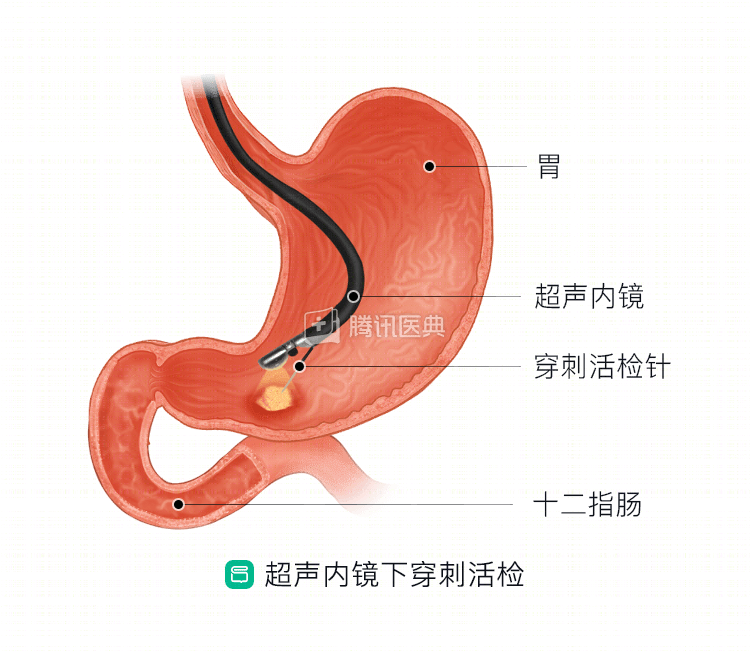
EUS is a combination of traditional gastroscopy and ultrasound technology that allows the physician to directly observe the morphology of the GI tract and perform real-time ultrasound scanning to obtain histologic features of the GI tract wall hierarchy and ultrasound images of the surrounding adjacent organs, allowing a more accurate determination of the depth of tumor infiltration. The EUS has become a standard diagnostic tool for preoperative staging of gastric cancer in foreign countries.
What is the significance of EUS in the diagnosis and management of gastric cancer?
EUS can be used for gastric cancer.
EUS can be used to stage gastric cancer and has the following important roles in the diagnosis and management of gastric cancer.
- To assist in accurate TNM staging and help determine prognosis;
- The depth of tumor infiltration can be distinguished, thus screening patients for endoscopic surgery and avoiding unplanned surgery;
- The lymph nodes surrounding the tumor can be determined, providing a reference for the physician to determine whether lymph node dissection can be achieved, and in particular, resectable tumors (stage T1~T4a) can be accurately distinguished from unresectable tumors (stage T4b), and to some extent, the results can guide the choice of treatment options;
- The European ultrasound endoscopy guidelines state that EUS can and should be used to stage gastric cancer without distant metastases prior to surgery to facilitate selection of the most appropriate treatment plan;
- It can determine whether the tumor invades adjacent tissues, such as whether the tumor invades the celiac trunk, superior mesenteric artery, etc;
- For some tumors that cannot be confirmed by conventional gastroscopy or gastroscopic biopsy, tumor aspiration biopsy under EUS can be performed to obtain direct evidence of pathological examination, which can avoid large trauma, bleeding and perforation caused by large biopsy, and obtain a clear pathological diagnosis with minimal trauma, especially for the differentiation of gastric lymphoid lymphoma, leathery stomach and giant hypertrophic gastric mucosal disease. It is an important guide for the identification of gastric lymphoid lymphoma, leathery stomach, and giant hypertrophic gastric mucosal disease.
Who needs EUS?
- Patients with peptic ulcer;
- Patients with gastritis;
- Patients with indigestion such as anorexia and bloating;
- Patients with a family history of gastric cancer or esophageal cancer;
- Patients who cannot be diagnosed clearly after gastroscopy.
What is the procedure of EUS examination?
- Fast for 6 to 8 hours before the test; EUS is available in two types: small probe EUS, in which water is injected into the stomach to facilitate visualization of the lesion, and large probe EUS, in which sedative pain medication is used to relieve intraoperative discomfort;
- Patients are given an oral anesthetic antifoam before the examination, which typically lasts for 2 hours to reduce gastric secretions, allow for clearer images, and facilitate passage of the EUS through the pharynx. Those with a history of allergies should inform the physician;
- During the examination, the patient remains in the left lateral position, relaxing the body as much as possible. Loosen tight clothing, ties and trouser bands, remove glasses, dentures, etc., and be in a more relaxed environment for the examination;
- During the examination, the patient is instructed to swallow easily and to breathe calmly without holding his or her breath as the EUS passes through the pharynx into the stomach. The procedure usually takes only about 30 minutes, but may take longer for complex conditions or those requiring special treatment.
What are the risks or harms of EUS?
Gastrointestinal EUS is safe and generally free of serious complications. Possible complications include aspiration, bleeding, gastrointestinal perforation, and cardiovascular accidents, but the incidence is low. The examiner will assess for risk and sign an informed consent based on the patient’s physical condition.
As with regular gastroscopy, no special treatment is required after EUS. Patients generally only need to abstain from food and drink for 2 hours after the test.
The need for EUS will be determined by the physician on a case-by-case basis, and the patient only needs to cooperate with the examination. (Contributed by Yu Miao, Department of Gastrointestinal Oncology, The First Hospital of China Medical University)