Key points of this article:
- Stem cell transplantation (including stem cells from bone marrow and other sources) can be effective in treating certain specific types of malignancies, such as leukemia and lymphoma. Stem cell transplantation has also been used to treat multiple myeloma and neuroblastoma, and researchers are currently investigating its use for other cancers.
- Why do patients with leukemia need a stem cell transplant? This is because high doses of chemotherapy and radiation destroy blood-forming stem cells in the bone marrow as they kill leukemia cells.
- The purpose of a stem cell transplant or bone marrow transplant is to replace the original diseased stem cells in the patient’s body with healthy hematopoietic stem cells and bone marrow after the chemotherapy and radiation treatments are finished. When the transplant is successful, the bone marrow will produce new blood cells in the body. In some cases, the transplanted bone marrow and stem cells can have the added benefit of the newly generated blood cells being able to attack and destroy cancer cells that survive radiation and chemotherapy.
What are stem cells?
You may have heard of “embryonic stem cells” in the news, but the stem cells used in cancer treatment are a completely different type, called hematopoietic stem cells.
Hematopoietic stem cells are different from most cells in the body in that stem cells have the ability to differentiate and form many types of blood cells. Specifically, hematopoietic stem cells can form oxygen-carrying red blood cells, infection-fighting white blood cells, and platelets that have clotting capabilities.
Most stem cells are located in the bone marrow, which is a spongy tissue within the bone. Hematopoietic stem cells outside the bone marrow (called peripheral blood stem cells) are present in the circulation, but bone marrow stem cells are mobilized from the bone marrow to the peripheral blood only after the application of certain drugs. Both bone marrow hematopoietic stem cells and peripheral blood stem cells can be used for transplantation to treat leukemia.
Transplantation, although effective, is not suitable for all patients
Stem cell transplantation can be life-saving, but not all patients are candidates for this treatment because the process is difficult and very long.
Given the great risks that stem cell transplantation can pose, patients should think carefully before deciding whether to undergo a stem cell transplant. The clinician needs to consider the patient’s overall health status, clinical diagnosis, disease stage, and prior treatment. Patients also need to undergo a series of ancillary tests to ensure that they are physically fit for transplantation. In addition, patients should be fully informed about the potential benefits and risks of stem cell transplantation prior to surgery.
Stem cell transplants may be effective for only some specific types of cancer. For example, although they were once used to treat breast cancer, medical experts have now long abandoned that option because studies have shown that stem cell transplants are less effective than conventional treatment options for breast cancer.
What are the sources of stem cells used for transplantation?
Stem cells used for transplantation (whether from peripheral blood or bone marrow) usually come from two sources: the patient themselves, or a matched stem cell donor.
- Autologous transplantation: Stem cells need to be removed from the patient’s body prior to chemotherapy and radiation and cryopreserved. After radiation and chemotherapy are completed, they are imported into the patient’s body.
- Homologous allogeneic transplantation: The stem cells used come from donors who have been successfully tissue-matched. Most donors are immediate family members, preferably siblings of the patient, of course.
HLA Matching
To verify that a donor’s stem cells are a match, their human leukocyte antigen (HLA) type is tested and then matched to the patient’s HLA. If the patient has an identical twin, the stem cells can be genotypically matched, a stem cell transplant protocol called an “allogeneic transplant.
Cord blood stem cells
Another source of stem cells is umbilical blood stem cells from the umbilical cord or placenta after delivery. Some parents choose to store or donate cord blood after the birth of their newborn, and the process of collecting cord blood poses no risk to the mother or newborn. However, because there is only a small amount of blood in the umbilical cord and placenta, this stem cell transplant option is usually only indicated for young children or pediatric patients.
Bone marrow banking
Stem cells can also come from a donor who is not related to the patient. Matching the patient’s bone marrow and tissue type with the donor information registered in the web-based database makes it possible to retrieve a suitable donor for the patient. When there is no tissue match among the patient’s relatives, the physician turns to the bone marrow bank.
How are stem cells collected?
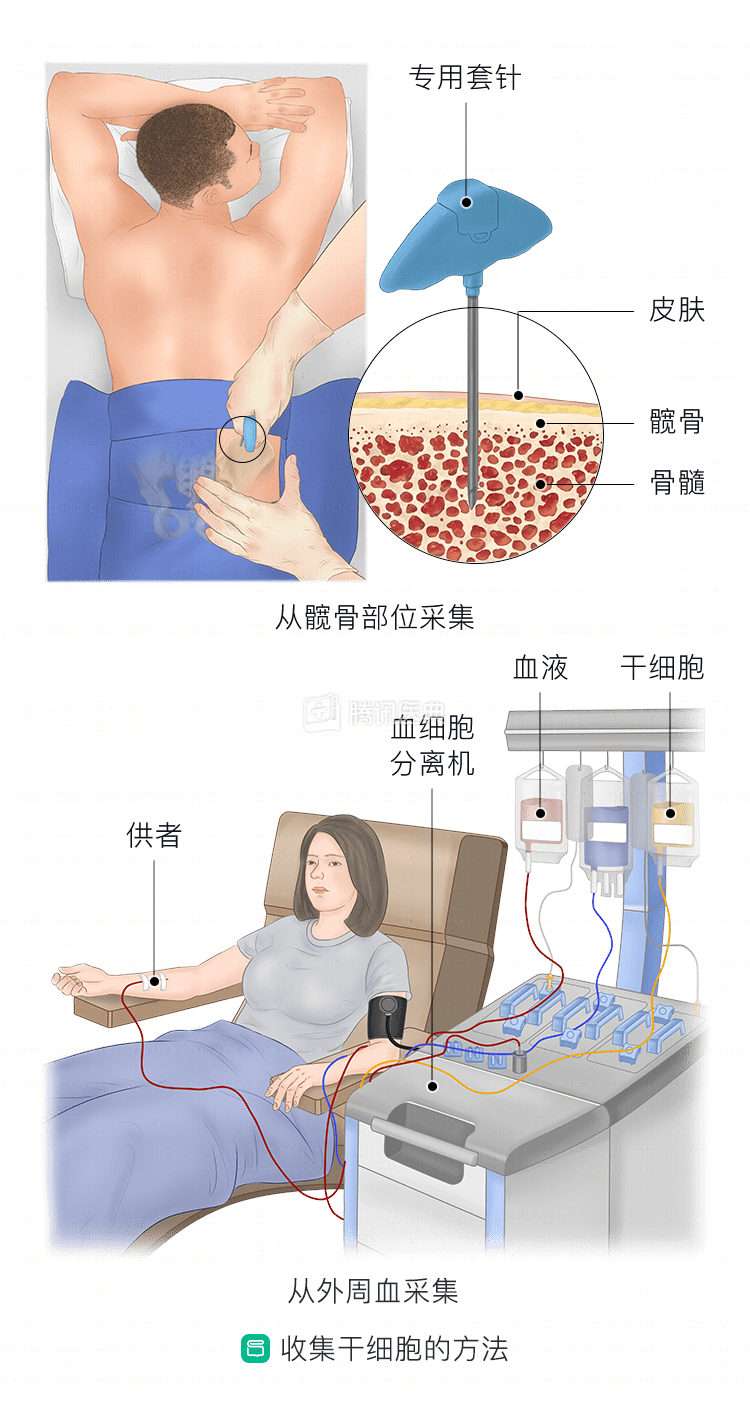
The way a doctor collects stem cells from a patient or donor depends on whether the stem cells needed are from peripheral blood or bone marrow.
Periodic blood stem cells
Harvesting stem cells from peripheral blood for cancer treatment is more common than bone marrow transplantation because the entire donation process is relatively simple, with physicians collecting stem cells from the donor’s or the patient’s own circulation and storing them. Peripheral blood stem cell transplantation has been shown to be more effective in treating certain types of cancer, but not all cancers.
- During the first few days of stem cell collection, the donor or the patient himself (autologous transplant) is given growth factors, drugs that increase the number of stem cells in the blood for a short time. However, the medication process may cause some side effects, including bone pain.
- When the donor’s peripheral blood has reached the right concentration of stem cells, medical personnel insert a blood collection catheter into the donor’s vein and filter the donor’s blood through a special machine that collects the filtered stem cells and transfuses the other components of the blood back to the donor.
- The process of collecting stem cells from peripheral blood usually takes 2 to 4 hours.
- The process may need to be repeated by the donor for several days before enough stem cells are collected.
The collected stem cells are frozen and preserved for subsequent transplantation. The process of harvesting stem cells is very low risk for the donor, who may experience dizziness or muscle cramps in the hands.
Bone marrow stem cells
The process of harvesting bone marrow is more complex and requires more stringent conditions than peripheral blood, so the procedure is performed in the operating room.
- The donor or the patient themselves (autologous transplant) will receive either general anesthesia (i.e., they are unconscious throughout the procedure) or epidural anesthesia (loss of sensation below the waist).
- The surgeon then inserts a needle into the bone (usually in the iliac region, which is near the hip joint) to remove some bone marrow and freeze it for storage.
This procedure usually takes 1 to 2 hours, and the procedure is very safe, with the most serious risks coming from the anesthesia process. The site where the needle was inserted can be somewhat painful or bruised in the following days, and the donor may feel fatigued for a few days or weeks afterwards.
Pre-transplant radiotherapy
Patients undergo chemotherapy and radiation therapy to remove as many cancer cells from their bodies as possible before receiving a stem cell transplant. To destroy abnormal stem cells, blood cells, and cancer cells, doctors usually use high-dose chemotherapy, high-dose radiation therapy, or a combination of radiation and chemotherapy regimens.
During this process, radiation and chemotherapy also kill healthy cells in the patient’s bone marrow, essentially to make room for subsequent stem cell transplants.
Patients’ blood counts (the number of red blood cells, white blood cells, and platelets) drop rapidly during high-dose radiation and chemotherapy. In addition, because chemotherapy and radiation can cause side effects such as nausea and vomiting, patients may need to take certain antiemetic medications to relieve their symptoms. Mouth ulcers are also a common clinical problem and can be treated with pain medications.
In preparation for a bone marrow transplant, the patient’s body becomes very fragile and lacks enough white blood cells in the body to fight off outside infections. So during this time, the patient is isolated in a hospital room or stays at home as requested by the doctor until the new bone marrow begins to grow. Patients may also need blood transfusions and certain medications to maintain general health.
What is the process of a stem cell transplant?
The actual stem cell transplant is performed within a few days after the patient finishes chemotherapy or radiation therapy.
- The previously frozen and stored stem cells (either autologous or allogeneic) are thawed and infused into the patient’s veins through an intravenous infusion. This process is essentially painless, and in fact, the stem cell transplantation process is not much different than a blood transfusion. The procedure takes about 1 to 5 hours.
- After that, the incoming stem cells automatically migrate to the bone marrow. After a few days or weeks, the bone marrow, which is gradually returning to normal function, will begin to produce normal blood cells.
Isolation and follow-up
The length of time a patient remains in isolation will depend on their body’s blood counts and overall health status. When isolation is lifted, the transplant team’s health care provider will instruct the patient on how to follow up with home care and prevent infection.
The provider will also advise the patient on what symptoms to seek immediate medical attention for. Full recovery of the immune system can take months or even years, during which time the doctor will need to check regularly to determine if the transplanted bone marrow is functioning properly.
Second transplantation
The course of stem cell transplant treatment can also vary. There is a transplant regimen called second transplantation, in which patients receive 2 rounds of chemotherapy and 2 stem cell transplants. These 2 transplants are usually completed within 6 months.
Microtransplantation
Another transplant treatment option is called “microtransplantation. Doctors administer low-dose chemotherapy and radiation before the transplant, although this is not enough to kill all the bone marrow cells or tumor cells. However, once the transplanted stem cells enter the patient’s body and survive, they produce immune cells that attack and kill the remaining tumor cells. This approach is also known as non-cleared marrow stem cell transplantation.
What are the risks of stem cell transplantation?
The main risk comes from chemotherapy and radiation prior to stem cell transplantation. When chemotherapy and radiation destroy the bone marrow city, there is a very high risk of infection and an uncontrollable tendency to bleed. Thus, even a common cold or flu can be fatal at this time.
After transplantation, it takes time for the patient’s blood counts to return to normal. In the short term, stem cell transplantation can cause side effects such as nausea, fatigue, hair loss, and mouth ulcers. Certain types of chemotherapy and radiation may also lead to infertility, organ damage, and the risk of new cancers.
Graft-versus-host disease
If the method of transplantation used is allogeneic, graft-versus-host disease can develop, where the immune cells produced by the new bone marrow mistakenly attack the healthy cells in the patient’s body. Graft-versus-host disease can lead to organ damage and even life-threatening conditions. To prevent this disease, some patients need to take immunosuppressive drugs.
In some cases, stem cell transplants may not work. The transplanted stem cells either die or are killed by the remaining immune cells in the patient’s body.
When a patient is considering stem cell transplantation for cancer treatment, it is important to have a full communication, discussion with the clinician to ensure that all potential risks are understood.
How do I decide whether to have a stem cell transplant?
Is a patient a good candidate for stem cell transplantation or bone marrow transplantation or not? This is not a simple decision. It is difficult enough to carefully weigh the potential clinical benefits and risks, let alone the disruption to the normal life of the patient and their family members during treatment.
However, patients do not have to be overly anxious, as thousands of cases have been treated with stem cell transplantation or bone marrow transplantation. Current transplant techniques are still being improved and refined, so they are safer and more effective than ever before.
Patients need to maintain confidence and actively cooperate with their health care providers during treatment. Also try to learn more about stem cell transplantation or bone marrow transplantation. It is also important to communicate fully with your doctor, especially at the important time when you are considering whether to participate in a clinical trial, and your doctor’s professional opinion is critical.
Patients also need to gain the understanding and support of their families and inform them of the rationale and possible outcomes of stem cell transplantation. The more informed the patient is about the disease and treatment, the more confident the patient will be.