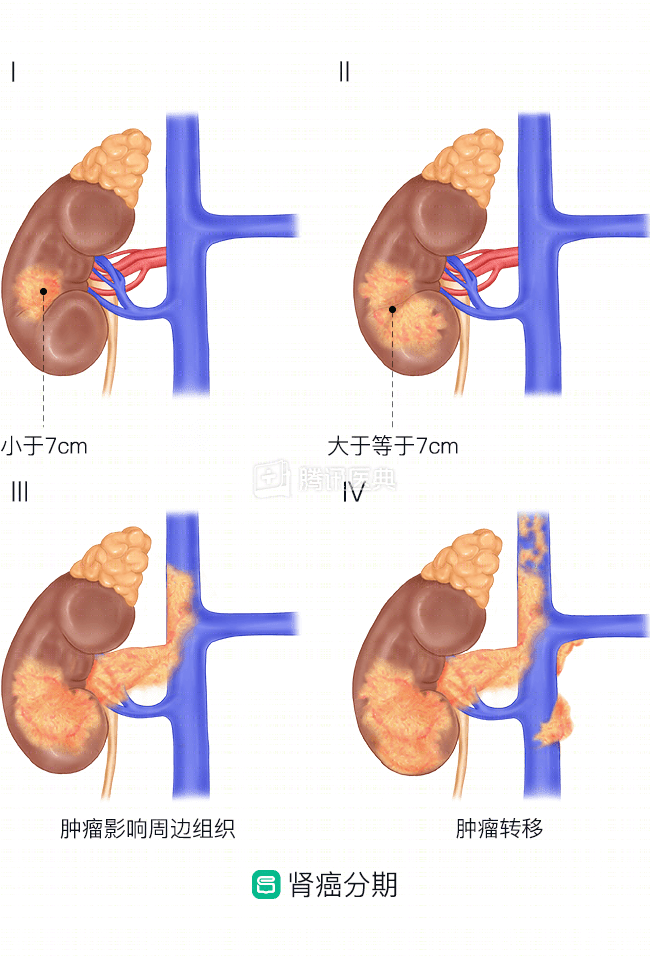
Approximately half of patients with kidney cancer are stage I and II, and the treatment of choice for these patients is surgery, which can cure most patients.
- Postoperative recurrence or metastasis is rare in stage Ia patients (90% to 95% free of recurrence and metastasis);
- In stage Ib patients, 80% to 90% are free of recurrent metastases, and in stage II patients, the rate is also 75% to 80%.
But even in very early stage kidney cancer, the possibility of tumor recurrence cannot be ruled out. Doctors assess each patient’s risk of recurrence after surgery, and if they are at moderate to high risk, the chances of recurrence are relatively high and adjuvant therapy may be needed.
The prognosis of early kidney cancer, in addition to being related to pathologic staging and grading, is also related to tumor type. Clear cell carcinoma usually has a higher risk of recurrence than papillary or suspicious cell carcinoma, and the risk of recurrence is greater in collecting duct carcinoma than in clear cell carcinoma.
Other factors that predict recurrence include:
- Age
- Physical condition
- Tumor-related symptoms
- Vascular infiltration
- Tumor necrosis
- Laboratory findings (white blood cell count, platelet count, hemoglobin level, hematocrit, calcium level, etc.)
.
Among all these factors, the pathologic stage of kidney cancer remains the most important.
Tumor recurrence, what to do?
You should consult your physician immediately after a recurrence. The first step is to complete a complete systemic examination to assess the site and severity of the tumor recurrence or metastasis.
- If the recurrence is localized to the surgical area and the surgeon assesses that surgery is possible, consider undergoing surgery again.
- If surgery is not possible then systemic systemic therapy, mainly including targeted therapy and immunotherapy, should be the mainstay.
- For some recurrent metastases, local treatments such as radiotherapy and radiofrequency/ cryoablation can be used to provide both symptomatic relief and better tumor control.