Surgery is an important part of gastric cancer treatment. In addition to choosing the appropriate surgical method, patients should also pay attention to post-surgical care, as proper care often helps to promote recovery, prolong life and improve life quality. So, what should be paid attention to after gastric cancer surgery?
Which position to take?
Patients are pushed back to the ward from the operating room, and until they are fully awake, the nursing staff will usually ask for a “decubitus position,” which means lying flat on the bed without pillows, with the head tilted to the side, to prevent aspiration after surgery. After awakening, when blood pressure, heart rate, respiration, oxygen saturation, and other vital signs are normal, the doctor will tell the patient’s family that they can help rock the head of the bed appropriately, so that the patient is in a low semi-recumbent position, which helps with ventilation, reduces pain, and decreases incisional tension.
What is observed?
The cardiac monitor at the bedside will always record the patient’s respiration, heartbeat, blood pressure, and other vital signs, and it is best for the patient’s family to also watch for indicators and watch for blood and fluid seepage from the incision and remind the patient to avoid movements that increase abdominal pressure.
Postoperative drains are placed to drain blood and fluid in a timely manner. The family should be careful to protect the drainage tube to avoid dislodgement and follow the instructions of the healthcare provider to keep the drainage tube clean and squeeze it regularly to ensure smooth drainage and prevent folding, twisting, and dislodgement. The drainage bag should not be higher than the surgical incision to prevent retrograde infection of the drained fluid. The family should also observe the fluid draining from the drainage tube. If a small amount of bloody fluid is drained from the gastric tube in the first few days after surgery, it is usually normal; if more bloody fluid is drained, the doctor needs to be notified promptly to determine the possibility of intra-stomach bleeding. The drainage fluid is usually light blood or light yellow, and if there are any other abnormalities, the physician must also be notified promptly.
Post-operative patients typically receive a urinary catheter, and families should secure the sterile urinary bag properly next to the bed to prevent traction and slippage. The drainage bag should also be positioned below the site of the urethral outlet to prevent retrograde infection. Care should be taken to keep the urinary catheter open, and 24-hour urine volumes should be recorded to observe any abnormalities in urine color, and the patient may need to be helped to flush the perineum twice daily. For patients with long-term indwelling urinary catheters, the healthcare provider will change the catheter regularly, open it every 3 to 4 hours to train the bladder reflex, or open it whenever the patient feels like holding urine.
How do I put on my compression stockings?
.
To avoid postoperative formation of blood clots that can cause fatal complications such as pulmonary embolism, after gastric cancer surgery, doctors usually ask patients to wear anti-thrombotic compression stockings. First, choose an elastic stocking that fits your calf circumference, avoid being too tight or too loose, and wear it correctly according to the instructions. When changing socks, do not take more than 30 minutes to remove them. The stockings should be washed in cold water and dried in the shade. Of course, if postoperative leg pain or swelling occurs, please consult the medical staff promptly. Family members should not move the patient or massage the patient’s leg to avoid unnecessary danger.
Rationalize activities
Appropriate early activity after surgery keeps the body functioning well and prevents complications.
On the day after surgery, you can breathe deeply in bed and move passively with the help of your family. Under the premise of protecting the drainage tube and gastric tube, you can turn over with the assistance of your family, but you should avoid increasing the abdominal pressure. After the condition is stable, you can sit at the bedside with the assistance of family members, and after there is no discomfort, you can stand on the bed. When in good condition, walk indoors as appropriate. Note that postoperative patients are often weak, and if they feel dizzy and sweaty, they should rest promptly to prevent falls.
Coughing up sputum correctly
If you are unable to get out of bed for a long time after surgery, family members should assist the patient to turn and pat the back as much as possible to practice deep breathing, coughing, and coughing up sputum. Use the strength of the wrist to pat the back, by using the palm side of the hand in a cup shape and snapping the patient’s back and both sides of the chest wall from bottom to top and from edge to center.
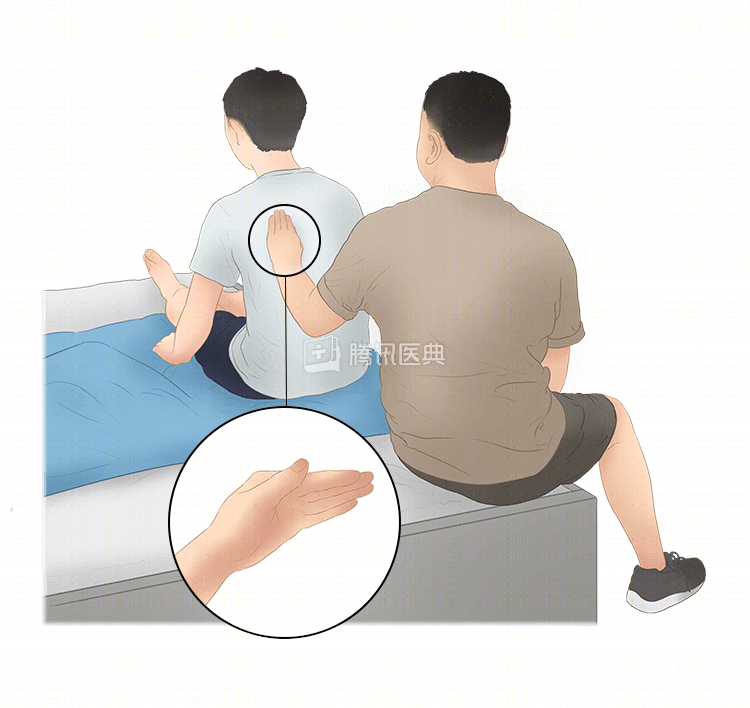
The surgeon may use nebulized inhalation and sputum medications to help expel thick sputum. After surgery, patients are often afraid to cough due to incisional pain, so coughing up sputum can be done in a seated position with hands gently pressing the abdominal wall from the sides to the center to relieve pain.
Rational diet
The postoperative diet for gastric cancer should follow certain principles: small number of meals, regular and quantitative, light and less greasy, low fat and high protein, and rich in nutrition. In the early postoperative period, it is advisable to eat light and easy-to-digest liquid food, and it is not advisable to eat milk, soybean milk and other easily flatulent food. After that, it can slowly become a semi-liquid diet, and after adaptation, it can gradually transition to a normal diet, but tobacco, alcohol, spicy, raw and fried foods should be avoided.
We should pay attention to a small number of meals, regular rationing, avoiding a large amount of liquid food at one time, reducing the intake of sugary foods, and lying down for 20-30 minutes after meals.
After gastric cancer surgery, patients need to be taken care of “in every detail”, and observation and care under the guidance of medical staff can help to achieve the ideal recovery. (Written by Jun Yan Zhang, Department of Gastrointestinal Oncology, The First Hospital of China Medical University)