Radiotherapy or radiotherapy is administered to patients with gastric cancer mainly for preoperative neoadjuvant therapy, postoperative adjuvant therapy, and palliative therapy. Because gastric cancer is a tumor that is less sensitive to radiotherapy and because some of the organ tissues surrounding the stomach are less tolerant of radiotherapy, it is less common for patients with gastric cancer to receive radiotherapy alone, mostly for receiving radiotherapy.
For whom is radiotherapy alone used?
Radiotherapy alone has now been replaced by concurrent radiotherapy in the treatment of gastrointestinal tract tumors, and is usually considered only when patients are assessed as potentially intolerant to the greater side effects of treatment or when other factors (e.g., weakness, recent cardiovascular disease such as atrial fibrillation or cerebral infarction) preclude the use of concurrent chemotherapeutic agents.
In which patients is preoperative radiotherapy used?
Preoperative radiotherapy is used for whom?
Preoperative radiotherapy is also known as neoadjuvant radiotherapy. Neoadjuvant therapy can improve surgical resection rates and reduce local recurrence rates, and its role has been demonstrated in the treatment of many malignancies. According to the 2011 NCCN Clinical Practice Guidelines for Gastric Cancer (Chinese version), it is recommended that for operable gastric cancer with preoperative evaluation of no distant metastasis in locally progressive stage (cT2-4) or with lymph node metastasis (cN+), surgery is recommended, or preoperative chemotherapy/synchronous radiotherapy is chosen followed by surgery; for unresectable locally progressive gastric cancer, preoperative synchronous radiotherapy can be chosen, and after treatment, re-staging can be considered before surgery if the tumor is in complete remission or significant remission.
However, it is worth noting that accurate clinical staging of gastric cancer is essential for rational selection of comprehensive treatment options and evaluation of prognosis. Currently, preoperative staging is based on abdominal CT and gastroscopy, which may be inaccurate. Physicians may improve the accuracy of clinical staging by adding gastroscopic intra-luminal ultrasound, laparoscopic preoperative staging, ascites cytology, or even functional imaging such as positron emission tomography (PET) and magnetic resonance imaging (MRI).
Postoperative radiotherapy is used in which patients?
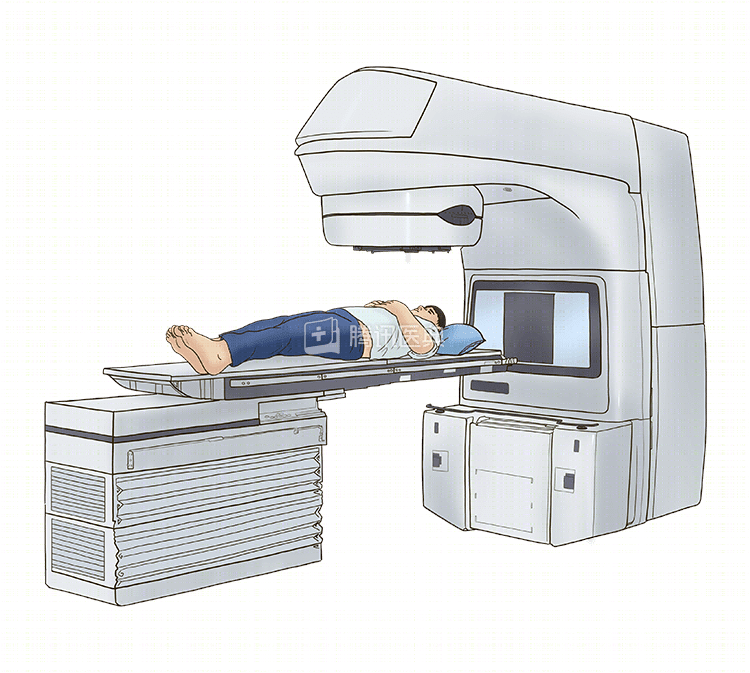
Postoperative radiotherapy, also known as adjuvant radiotherapy, is designed to destroy potentially residual tumors, reduce local recurrence, and prolong survival. The combination of radiotherapy and chemotherapy can significantly kill residual postoperative lesions and is mainly used for patients with gastric cancer with TNM staging of T3 to T4 or positive lymph nodes, including the following conditions:
- Patients with post-radical gastric cancer (microscopic R0 resection without tumor remnants) with pathologic staging of T3 to T4 or positive lymph nodes (T3 to 4N+M0) who have not undergone standard D2 surgery (i.e., clearance to station 2 lymph nodes) and have not undergone preoperative radiotherapy, postoperative concurrent radiotherapy is recommended.
- Patients with non-radical resection of gastric cancer with tumor remnants (R1 resection with tumor remnants found microscopically or R2 resection with tumor remnants visible to the naked eye) are recommended to undergo postoperative concurrent radiotherapy.
In which patients is palliative radiotherapy used?
For locally unresectable or recurrent gastric cancer, radiotherapy provides little relief, and radiotherapy alone has little chance of curing advanced gastric cancer, but mainly reduces symptoms and serves to stop bleeding, relieve pain, and relieve tumor-induced gastrointestinal obstruction. Currently, palliative radiotherapy is mainly used for gastric cancer with local regional recurrence of tumor and/or distant metastasis, including the following cases:
- Gastric cancer with local regional recurrence for which radiotherapy or radiochemotherapy is recommended.
- Metastatic gastric cancer with relatively limited lesions, bone metastases causing pain and brain metastases, etc., consider palliative decompensated radiotherapy for the metastatic or primary tumor lesions.
Which patients should not receive radiotherapy?
Not all patients can receive radiotherapy. Due to intolerance, radiotherapy is contraindicated in the following patients:
- Patients with significant cachexia, such as wasting, dehydration, and very poor nutritional status;
- Patients who are unable to tolerate severe nausea and vomiting.
When you know which patients can receive radiotherapy, you will have an understanding of your doctor’s treatment decision, but medicine is not set in stone, and your doctor needs to make a comprehensive assessment of whether you should receive radiotherapy or radiochemotherapy in the context of your patient’s specific situation. (Contributed by Xiaowan Chen, Department of Gastrointestinal Oncology, The First Hospital of China Medical University)