China is a country with a high incidence of gastric cancer, however, the symptoms of early gastric cancer are often not obvious, and most patients have developed progressive gastric cancer by the time they are seen, so early screening for gastric cancer is especially important. The most important thing is to have early gastric cancer screening.
Primary screening to determine the risk of gastric cancer
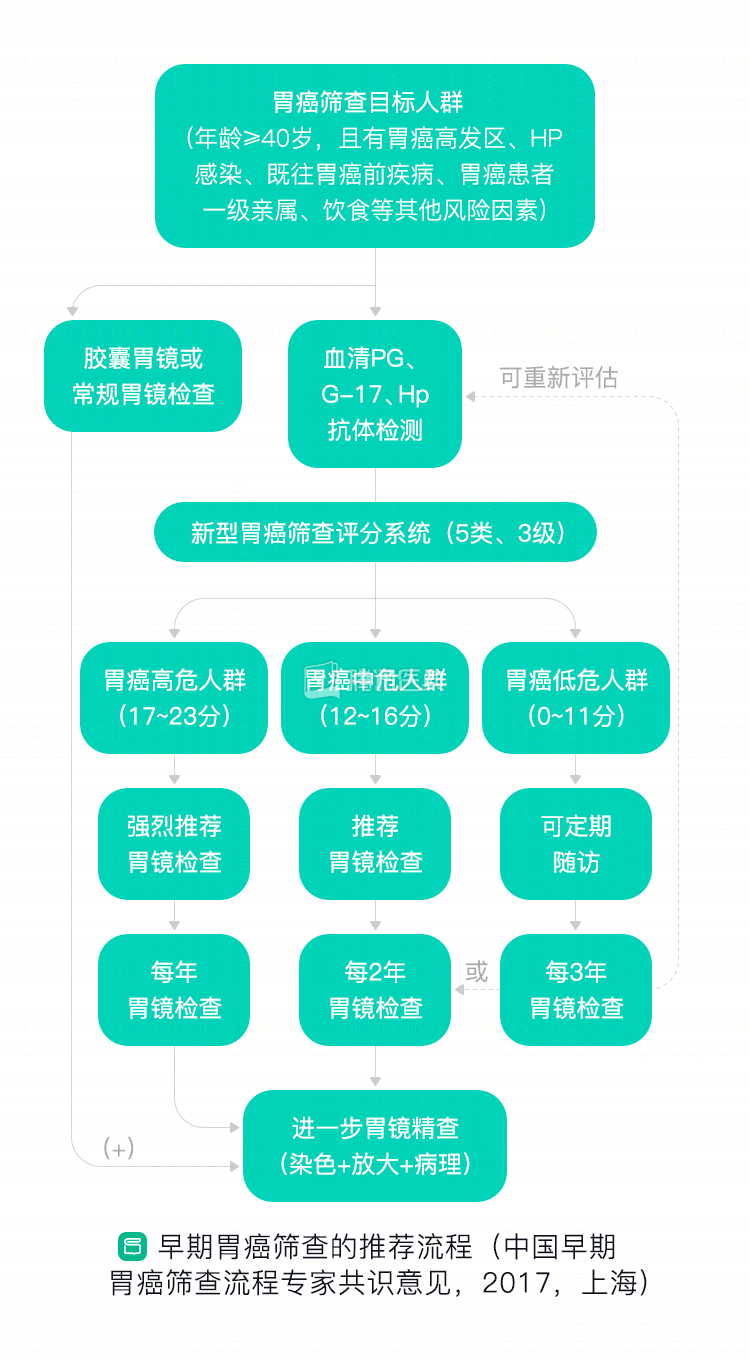
For people who need to be screened for gastric cancer, the first step is usually a blood test, or serologic screening. Based on initial tests for serum pepsinogen (PG), serum gastrin-17 (G-17), serum tumor markers, and Helicobacter pylori (Hp) infection, the results are scored according to a gastric cancer screening scoring system, as shown in the table below.
| Table Stomach Cancer Screening Scoring System |
| Variable Name |
Categories |
Score |
| Age (years) |
40-49 |
0 |
| 50-59 |
5 |
| 60-69 |
6 |
| greater than 69 |
10 |
| Gender |
Female |
0 |
| Male |
4 |
| Hp (Helicobacter pylori) infection |
None |
0 |
| Yes |
1 |
| PGR (pepsinogen ratio) |
≥ 3.89 |
0 |
| <3.89 |
3 |
| G-17 (serum gastrin-17) (pmol/L) |
< 1.5 |
0 |
| 1.5-5.7 |
3 |
| > 5.7 |
5 |
The risk of gastric cancer can be determined based on the scores, with those at intermediate and high risk with a score ≥12 being at high risk for gastric cancer:
- 17 to 23: High risk of gastric cancer, very high risk of gastric cancer;
- 12 to 16: High risk of gastric cancer, very high risk of gastric cancer;
- 12~16 points: intermediate risk of gastric cancer, with a somewhat elevated risk of gastric cancer;
- 0~11 points: low risk of gastric cancer, the risk of gastric cancer is similar to that of the general population.
Fine screening with further gastroscopy in high-risk groups
For people screened by serologic screening who are at high risk for gastric cancer, further gastroscopic screening is usually performed. A gastroscopy strategy for these populations can help improve the diagnosis of early gastric cancer. For those at average risk of developing gastric cancer, a strategy of regular follow-up is possible, which helps to conserve health care resources.
The screening process for gastric cancer is detailed in the figure below.