A 68-year-old man had a physical examination 1 month ago and a gastroscopy revealed an elevated ulcer-type lesion in the stomach. The patient was seen in the hospital, and another gastroscopy was performed, which revealed a 3.0 x 3.5 cm lesion, and a biopsy was taken and the pathology was reported as gastric cancer (moderately differentiated tubular adenocarcinoma). What treatment will the patient receive next?
Treatment: assessment of staging and systemic status, laparoscopic surgery
The patient’s examination upon admission includes a determination of the stage of gastric cancer and an assessment of the physical status to tolerate surgical treatment.
To further understand the depth of gastric cancer infiltration and lymph node metastasis and to clarify the stage, the patient underwent the following imaging studies. A 3-dimensional enhanced CT examination of the stomach revealed thickening of the gastric wall in the sinus region and no enlarged lymph nodes in the retroperitoneum. Three-dimensional ultrasound endoscopy showed the structure of the gastric wall more clearly and also revealed, after examination, a bulging lesion in the gastric sinus, but pathological examination after taking a biopsy did not yield positive results, showing only chronic moderate inflammation of the gastric sinus with some moderate and a few moderate-to-severe heterogeneous hyperplasia of the glandular epithelium.
After the patient underwent routine blood and liver and kidney function tests, the surgeon considered the surgical treatment to be tolerated. As for the surgical approach, both laparoscopic surgery and surgical open surgery are options. Considering the less invasive and faster recovery of laparoscopic surgery, the patient underwent laparoscopic surgery to remove the gastric cancer. The day before surgery, the patient underwent gastroscopy for preoperative localization of the lesion by placing a titanium clip 2 to 3 cm above the superior margin of the lesion. The following day, a radical distal major gastrectomy was performed laparoscopically.
Postoperative pathology showed that early gastric horn carcinoma with infiltration depth T1a, moderately differentiated adenocarcinoma, no metastatic carcinoma was seen in 29 lymph nodes picked up, and the pathological stage of this gastric cancer was stage IA (T1aN0M0). According to the current Chinese Society of Clinical Oncology (CSCO) guidelines, postoperative adjuvant chemotherapy is not recommended for gastric cancer with pathological stage I s. Therefore, this patient did not receive postoperative antitumor combination therapy such as chemotherapy and followed the physician’s recommendations for regular follow-up.
Analysis: Early gastric cancer, open or laparoscopic?
Minimally invasive surgery is very mature today and is no different from open surgery in the treatment of gastric cancer. In one study comparing laparoscopic versus open surgery for D2 radical gastric cancer, laparoscopic surgery resulted in shorter incision length, less intraoperative bleeding, shorter postoperative defecation time, and shorter hospital stay than open surgery, with no significant differences in recurrence, metastasis, or death rates at an average follow-up of 24 months.
Laparoscopic surgery has the advantages of less trauma, faster recovery, and less postoperative pain, and is unlike traditional open surgical procedures in terms of total abdominal exploration and exponential magnification of the surgical field.
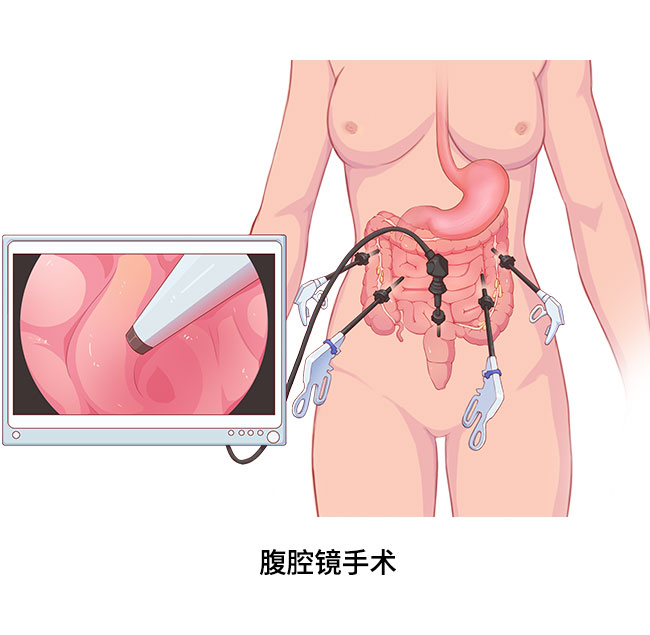
Overall, for distal gastrectomy in cT1N0 and cT1N1 stage gastric cancer, laparoscopic versus open surgery has a comparable safety profile with no significant difference in short-term outcomes, and therefore can be a routine treatment option; however, laparoscopic total gastrectomy for early gastric cancer is not supported by large, high-quality studies and remains poorly documented.
However, laparoscopic surgery is not a “one-size-fits-all” procedure. The requirements for laparoscopic surgery are high with respect to the physical status of the patient and the stage of the cancer. From the patient’s perspective, laparoscopic surgery requires a certain amount of weight, and a body mass index (BMI, which is weight divided by height squared) between 25 and 30 kg/m is generally not appropriate for laparoscopic surgery; laparoscopic surgery requires the establishment of a pneumoperitoneum, which is poorly tolerated by patients with poor cardiopulmonary function; laparoscopic surgery should also be carefully selected for patients with a history of previous abdominal surgery and poor physical infrastructure. For patients with previous history of abdominal surgery and poor physical condition, laparoscopic surgery should also be chosen carefully. From the oncological point of view, it is still controversial whether laparoscopic surgery is acceptable if the progressive gastric cancer has penetrated the outermost plasma membrane of the gastric wall. In addition, laparoscopic surgery is more costly than conventional surgery and has complications associated with pneumoperitoneal accidents as well as puncture accidents.
Summary
For early-stage gastric cancer, the 5-year survival rate is usually over 90%. If the patient’s physical condition permits and there are no contraindications to surgery, the surgeon will usually perform surgery, and postoperative adjuvant chemotherapy is usually not required. As to whether open surgery or laparoscopic surgery should be performed, doctors will make a judgment based on the stage of the tumor and the patient’s general condition, but there is no difference in the curative effect of gastric cancer regardless of the method used. (Contributed by Yu Miao, Department of Gastrointestinal Oncology, The First Hospital of China Medical University)