Bone marrow is a spongy tissue found in the bones of the body, and its function is to make and store blood cells. When the bone marrow is destroyed, the body’s ability to synthesize blood cells is drastically reduced, and thus the number of immune cells decreases.
Bone marrow transplantation, which uses healthy bone marrow cells to replace damaged bone marrow, can cure certain serious diseases or cancers by transplanting new bone marrow. However, bone marrow transplants require a longer recovery process and can have some serious side effects. If a patient is considering the option of a bone marrow transplant, the pros and cons of the transplant procedure should be fully discussed with the clinician beforehand.
Which patients need a bone marrow transplant?
Bone marrow stores the body’s hematopoietic stem cells, which are able to differentiate into the following types of cells:
- Red blood cells, whose function is to transport oxygen throughout the body.
- White blood cells, which are involved in the immune response as an important part of the immune system.
- Platelets, which help with clotting after bleeding has occurred.
Some types of tumors, such as leukemia, lymphoma, and multiple myeloma, can destroy the body’s bone marrow. Certain cancer treatments may also damage the bone marrow, such as high doses of chemotherapy or radiation therapy.
If one has severe aplastic anemia (where the patient’s body cannot produce enough blood cells), a bone marrow transplant can be a treatment. It can also be used to treat certain autoimmune diseases to prevent the patient’s immune system from attacking his or her own healthy tissues.
What do I need to do before a bone marrow transplant?
Before the transplant, the doctor needs to determine if the bone marrow transplant will work for the patient. The clinician will perform a physical exam, routine blood tests, and check the function of the heart, lungs, liver, and other organs with a number of ancillary tools.
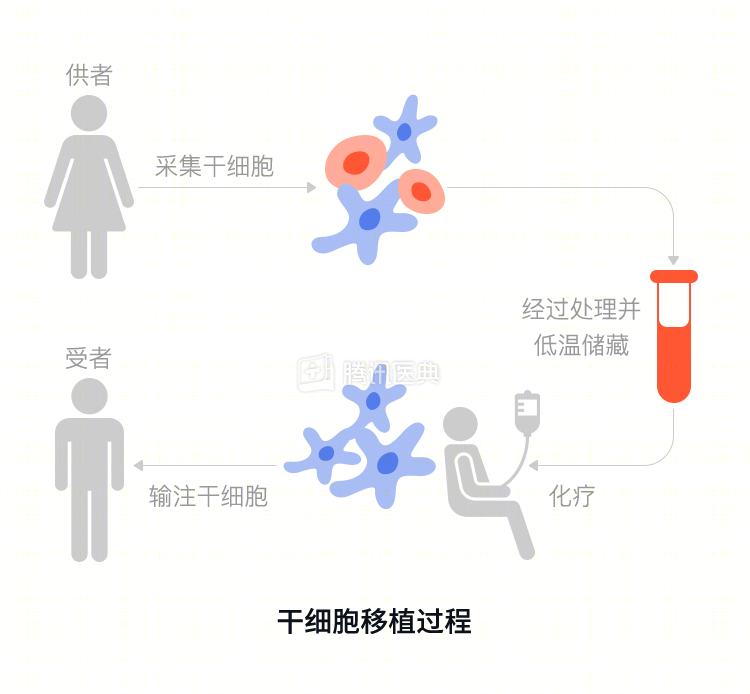
If the patient’s condition is suitable for a bone marrow transplant, a source of hematopoietic stem cells that is compatible with the patient needs to be found. The stem cells for transplantation can come from the patient’s own source (called an autologous transplant), from an identical twin or triplet (an allogeneic transplant), or by selecting a genotype-matched donor (an allogeneic transplant). The patient’s family members are usually good bone marrow match donors, and doctors can also search the database for genotype-matched donors.
The donor database can help patients match for a leukocyte surface protein called human leucocyte antigen (HLA). Typically, HLA types are very close between family members. The probability of finding a matched donor is relatively high in people of the same race or ethnicity.
Whether the HSCs used for transplantation are from the patient’s own blood or from a donor, the physician will use one of three methods:
- Aspiration directly from the bone marrow with a needle, usually the hip bone or sternum is chosen for collection, but this method is rarely used today;
- Acquisition from the blood of the patient or donor;
- Cord blood from newborns after birth.
What is the procedure for a bone marrow transplant?
Before the stem cell transplant, the patient goes to the hospital for a central venous line, which is a catheter inserted into a large vein in the chest. The patient also receives a 10-day course of high-dose chemotherapy or radiation to remove leukemia cells and make room in the bone marrow for the new transplanted cells to grow. It also suppresses the body’s immune system for a short period of time, ensuring that the newly transplanted stem cells are not attacked by the immune system.
During the transplant process, hematopoietic stem cells are introduced into the patient through a central venous catheter. The input of hematopoietic stem cells does not cause pain, so no anesthesia is needed.
Once in the patient’s blood, the HSCs migrate to the bone marrow. They will then differentiate into red blood cells, white blood cells, and platelets. This whole process is called a hematopoietic stem cell transplant, and it usually takes 2 to 4 weeks.
What do I need to know after a bone marrow transplant?
Everyone’s recovery process is different, and patients remain hospitalized for several weeks or months after a bone marrow transplant. During this process, the patient’s immune system is depressed and medications are needed to prevent infection, and blood transfusions may be required for treatment.
During the first few weeks after the stem cell transplant, the doctor will often perform hematology tests to assess whether the stem cell transplant is working. Doctors may also need to take a sample of the patient’s bone marrow for testing.
If the transplanted stem cells are from a donor, patients need to keep an eye out for symptoms of graft-versus-host disease, which means that the transplanted stem cells are attacking the patient’s tissues and organs. These symptoms include:
- Rash or blisters;
- stomach upset or loss of appetite;
- Diarrhea;
- abdominal distention or blood in the stool;
- Yellowing of the skin (jaundice) and tea-colored urine.
Graft-versus-host disease may develop long-term symptoms. These symptoms include:
- Dry eyes;
- Joint pain;
- Mouth ulcers;
- Coughing fits;
- Difficulty breathing;
- discomfort in the penis or vagina, and painful intercourse.
After a stem cell transplant, it takes a year or more for the patient’s immune system to recover. Patients need to stay on medication and have regular follow-ups, and should not return to work or other activities for a while.
The success of a bone marrow stem cell transplant depends on many factors, such as what types of treatments the patient has had, what effect those treatments have had on the disease, the age of the patient, and overall health status. Nevertheless, this therapy has cured thousands of leukemia patients. Doctors and researchers are also exploring ways to optimize and refine bone marrow transplant protocols.