Multidisciplinary team (MDT), first proposed by American oncologists, is also known as multidisciplinary integrated treatment team and multidisciplinary expert team treatment model, which is a daily routine of scheduled time, place, and specialists with multiple specialists working together in a systematic, demanding, and responsible organization. It is a patient-centered, multidisciplinary expert-based treatment model at its core.
Why multidisciplinary care?
The treatment process of gastric cancer includes diagnosis, preoperative staging, surgery, and comprehensive perioperative treatment, a process that requires the close collaboration of multidisciplinary and multidisciplinary medical professionals such as surgery, medical oncology, imaging, radiotherapy, interventional medicine, and pathology. In modern medical specialization, even the most famous specialists cannot be proficient in all disciplines at the same time, so the importance of MDT is becoming more and more obvious. This is best described by the saying “three stinkers are better than a wise man”. Specifically, China’s Expert Consensus on Multidisciplinary Comprehensive Treatment of Gastric Cancer Collaborative Group Treatment Model summarizes the benefits of MDT as follows:
- MDT can improve the accuracy of gastric cancer diagnosis, accurately assess the preoperative staging of gastric cancer, and then guide the standardized treatment of gastric cancer and determine the prognosis;
- MDT is necessary to implement rational and comprehensive treatment for gastric cancer patients and can optimize decision making in gastric cancer.
- MDT will also play an important role in follow-up, guiding patients to adjust their life and dietary habits after surgery and urging regular review and follow-up, thus prolonging survival time and improving patient satisfaction.
What factors need to be considered in multidisciplinary treatment?
Before starting multidisciplinary treatment, a detailed pre-treatment examination is completed, including history taking, physical examination, blood biochemistry, imaging, endoscopy and pathological diagnosis. In the MDT team consultation, experts from relevant departments discuss the specific treatment plan based on the understanding and analysis of the patient’s history and clinical data.
The main elements of the MDT discussion include.
- Preoperative staging: Prior to developing a treatment plan, the physician will perform accurate staging of the patient with gastric cancer. The information needed for staging includes gastroscopy, ultrasound gastroscopy, gastrointestinal imaging, CT, magnetic resonance imaging (MRI), and positron emission computed tomography (PET-CT) scan.
- Preliminary determination of tumor resectability and the possibility of achieving R0 resection (i.e. radical resection, microscopic observation of tumor edges without cancer cells).
- Assessment of the patient’s general status: The physician usually evaluates the patient using a scale such as the Karnofsky score (0-100 on a scale of 11 for physical status), the WHO physical status score (0-4), or the ECOG (0-5). In addition, the patient’s age, the presence of underlying disease, and cardiopulmonary function should be fully considered.
- Determining patient classification: Before further evaluation, patients are initially categorized. Based on the tumor condition, they can be broadly classified into focal gastric cancer and metastatic gastric cancer, of which focal gastric cancer can be subdivided into three types: systemic good condition with resectable tumor, systemic good condition but unresectable tumor, and poor systemic condition 3.
- The initial treatment is determined by the patient’s systemic status, the biology of the disease, and the stage of the disease.
- Decide whether postoperative adjuvant therapy or preoperative neoadjuvant therapy is needed based on evidence-based medical evidence.
- Determine treatment delivery plan, including timing of implementation and efficacy assessment.
What roles are involved in multidisciplinary treatment?
Depending on the characteristics of gastric cancer, the gastric cancer MDT team usually includes gastrointestinal surgery, medical oncology, gastroenterology, diagnostic departments (pathology, imaging, ultrasound, nuclear medicine, etc.), and endoscopy centers. If the gastric cancer metastasizes to other organs, the staff of related departments can be invited to participate. If necessary, nursing staff, psychologists, nutritional support specialists, and social workers (hospice care) can be included, and all participants in the MDT discussion should be experts in each specialty, not only with independent diagnostic and therapeutic capabilities, but also with a certain level of learning and scholarship.
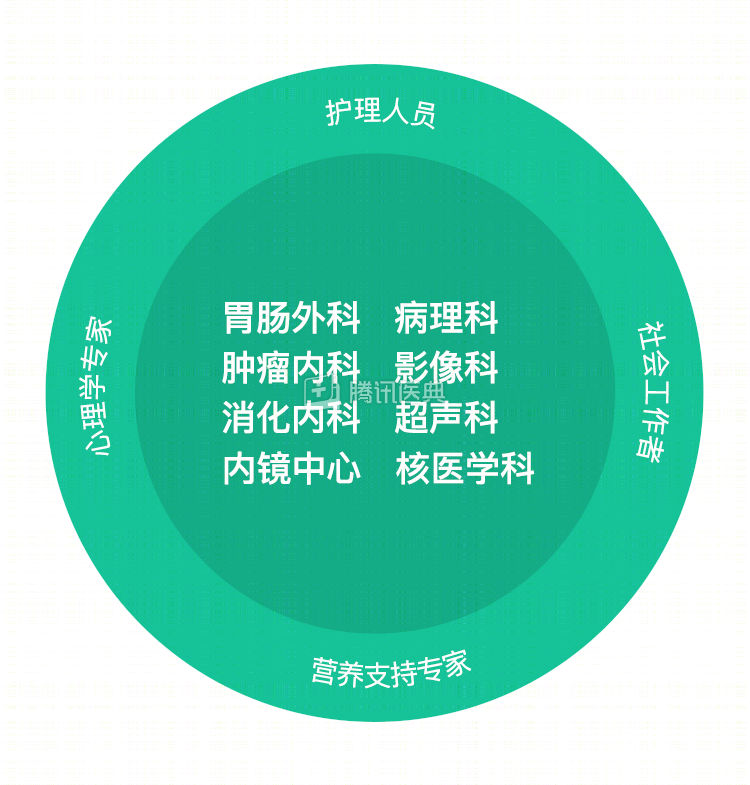
MDT is a good model for the treatment of gastric cancer, but its implementation is still difficult in many regions, and physicians will consider whether to choose MDT based on each patient’s specific condition and local medical conditions.