Fine screening for gastric cancer in a certain population can help detect it early and treat it promptly. What methods may be used to screen for gastric cancer? This article provides an overview.
Blood tests
Pepsinogen (PG) test
PG is a good indicator of the secretory function of the gastric body and sinus mucosa, including PG I and PG II. When atrophy of the gastric mucosa occurs, the level of PGⅠ and/or the PGⅠ/Ⅱ ratio (PGR) in the blood will decrease. The investigators concluded that a PGⅠ of no more than 70 μg/L combined with a PGR of no more than 3 (the range of reference values may vary between test products) is a good screening reference value for gastric cancer screening in an asymptomatic healthy population.
Gastrin-17 (G-17) assay
G-17 is one of the sensitive indicators of gastric sinusoidal secretion and can indicate atrophy of the gastric sinusoidal mucosa or the presence of abnormal proliferation. g-17 itself has a role in the development of gastric cancer. The G-17 test in combination with the PG test is valuable in detecting gastric cancer.
Tumor marker testing
Tumor markers commonly used today include carcinoembryonic antigen (CEA), glycoconjugate antigen 19-9 (CA19-9), and glycoconjugate antigen 72-4 (CA72-4). However, in progressive gastric cancer, the positive rate of these tumor markers is only 20% to 30%, and in early gastric cancer, the positive rate is even less than 10%. Therefore, tumor markers are of limited value for screening early gastric cancer and are generally not recommended as a routine method for gastric cancer screening.
Testing for Helicobacter pylori (Hp) infection
The World Health Organization (WHO) International Agency for Research on Cancer classified Hp as a class I carcinogen for gastric cancer in 1994. It is now believed that Hp infection is a necessary but not the only condition for the development of most gastric cancers, and that the development of gastric cancer is the result of a combination of Hp infection, genetic factors, and environmental factors. The Hp infection test has therefore become a necessary part of the screening process for gastric cancer.Hp screening is performed by detecting antibodies in the blood (i.e., serum Hp antibody test) or by a breath test, the urea breath test (UBT).
Electron gastroscopy screening
Plain gastroscopy is indicated for the detection of progressive gastric cancer and has a lower detection rate for early gastric cancer. The detection of early gastric cancer is usually more dependent on the physician’s experience with gastroscopy, and for some people at high risk of gastric cancer, physicians often prefer to use electronic, chemical staining and magnifying gastroscopy equipment for screening with gastroscopy, also known as “gastroscopic precision”.
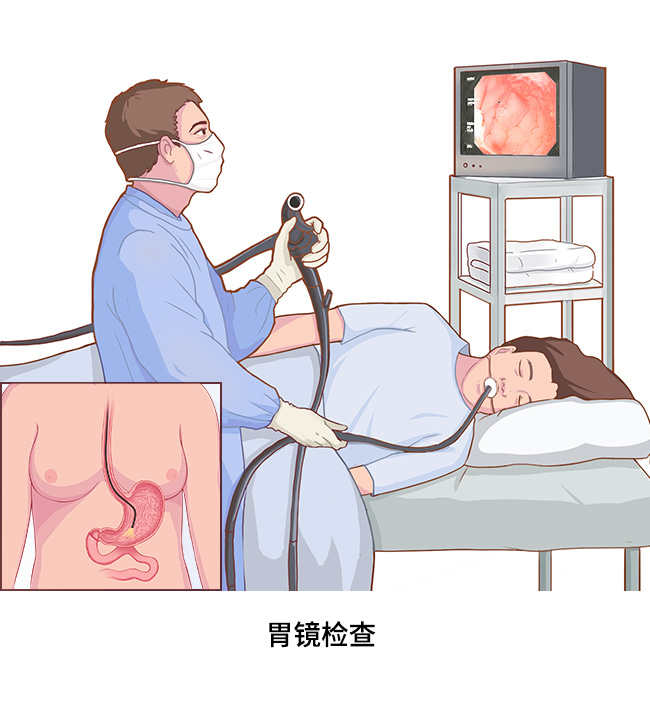
While gastroscopy and pathological biopsy are the current “gold standard” for diagnosing gastric cancer, gastroscopy relies on equipment and endoscopist experience, and is relatively expensive, painful, and poorly accepted by patients, so even in developed countries such as Japan, mass gastroscopic screening for gastric cancer has not yet been implemented. In China, gastroscopy is currently used only for regular follow-up examinations in people with a certain risk of stomach cancer.
Barium meal imaging of the upper gastrointestinal tract is not recommended for gastric cancer screening because of its low positivity rate and its radioactivity. In general, in gastric cancer screening, physicians usually use noninvasive methods (such as blood tests) to screen for people at high risk for gastric cancer and then perform a purposeful gastroscopic fine-scopy in this group.