What is renal artery embolization therapy?
Renal artery embolization is a procedure in which a specially designed puncture needle, catheter, or other device is inserted through a blood vessel into the lesion area in the body for imaging and simultaneous local treatment, guided by medical imaging instruments such as X-rays, CT, and ultrasound. Based on the fact that most kidney cancers are rich in blood supply and are mainly supplied by the renal artery, selective renal artery embolization to completely or partially block the arterial blood supply to the kidney is expected to result in ischemic necrosis of the tumor tissue for the purpose of treating the tumor.
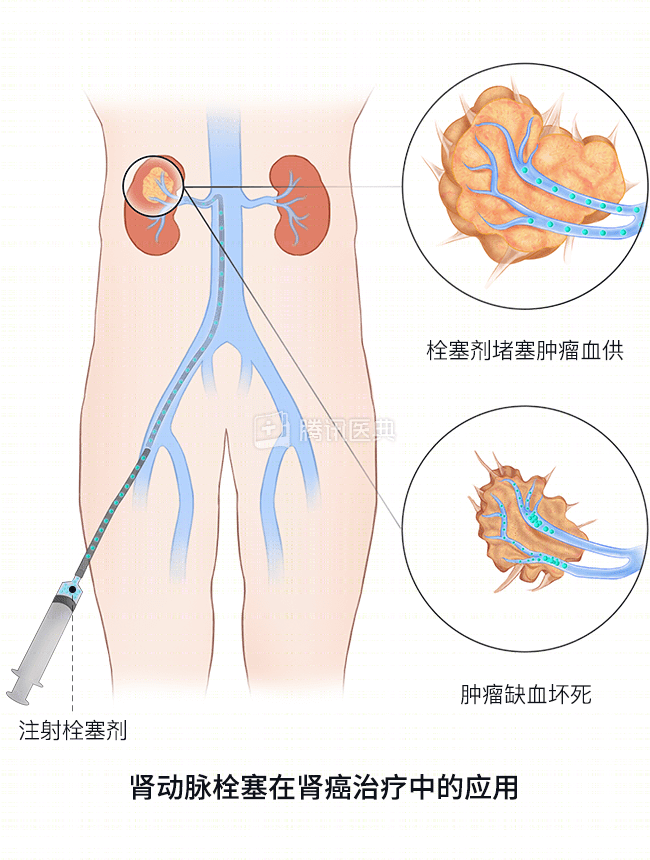
This treatment has been used in preoperative preparation of large renal tumors (typically >10 cm in diameter) and in palliative treatment of kidney cancer patients who are not candidates for surgical treatment.
Commonly used embolization agents include gelatin sponges, sea bolts, anhydrous ethanol, polyvinyl alcohol, and occlusive gels.
What is the role of renal artery embolization in the treatment of kidney cancer?
- Renal artery embolization before radical surgery for giant kidney cancer can result in significant shrinkage of the kidney tumor, disappearance of renal artery pulsation, atrophy of the veins on the surface of the tumor, edema of the surrounding tissues, easy separation, significant reduction in surgical bleeding, and shortening of surgical time, making the surgery relatively safe and easy and greatly improving the resection rate of kidney cancer.
- After embolization of the renal artery, the pressure transmitted to the renal vein decreases, and then the chances of preoperative and intraoperative dissemination of cancer emboli from the intrarenal or renal vein to the extrarenal area, especially to both lungs, are significantly reduced.
- Preoperative necrotic tumor tissue can stimulate the body’s immune system and improve immune function.
For patients who cannot undergo surgical treatment, many physicians believe that embolization should be aggressively pursued because it sometimes significantly improves the quality of survival and prolongs the patient’s life. The tumor shrinks in size over time and bleeding stops, resulting in pain relief and improvement in systemic symptoms. It also controls endocrine symptoms caused by the tumor (the so-called paraneoplastic syndrome), such as erythropoietin-induced erythrocytosis, thyroxine-induced increased blood calcium, and renin-induced hypertension.
In addition, palliative embolization can be considered repeated at variable intervals, and in principle, renal arteriography and embolization can be considered again when the symptoms and signs improve and then recur, or when imaging suggests an enlarged cancer site.