After thyroid cancer surgery, some patients experience decreased blood calcium and numbness and twitching in the hands and feet. What do you need to do to cope with this?
This is due to damage to a small but important gland, the parathyroid gland, during surgery.
What is the parathyroid gland?
The parathyroid glands are located on the back of the thyroid gland, usually one above and one below, with a total of 4 on the left and right (the number varies from person to person; 3 to 8 have been reported in the literature). Normally, they are the size of a grain of rice, flat and ovoid, and morphologically resemble fatty granules and lymph nodes.
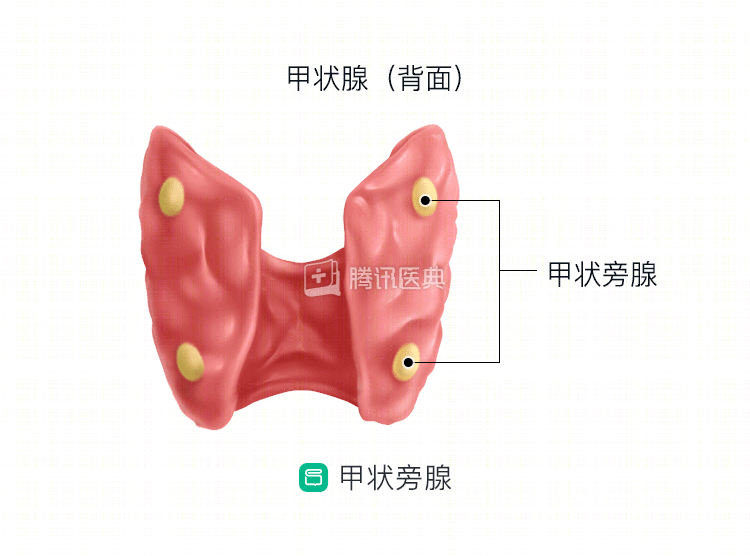
The parathyroid glands may be small, but they do a lot. They secrete parathyroid hormone (PTH), which regulates the balance of calcium and phosphorus metabolism in our bodies and raises blood calcium levels in the bones, kidneys, and other organs. And calcium ions are indispensable for maintaining normal muscle and nerve function.
With such a small gland, you can imagine that the blood vessels supplying it are also quite slender and highly susceptible to damage.
What are the signs of surgical damage to the parathyroid glands?
Injury to the parathyroid glands can lead to hypocalcemia, which can be determined by taking blood for calcium levels. The normal level of calcium may vary from hospital to hospital and is usually less than 2.1 millimoles per liter (mmol/L), and your doctor will consider hypocalcemia.
Early signs of hypocalcemia are numbness and twitching in the palms of the hands and soles of the feet, and in severe cases it is called “hypocalcemia crisis,” which can lead to laryngeal spasms, choking, or even death.
It is important to note that the word “severe” here refers to the symptoms, not the degree of “hypocalcemia”. In other words, it is not just the blood calcium value, but other factors such as the speed and duration of the decrease in blood calcium and the intensity of the patient’s response to the low calcium that affect the severity of the symptoms.
When calcium is extremely low, if the patient is unable to tolerate it, myocardial function may be affected and heart rhythm disturbances (medically known as “arrhythmias”), and in severe cases, ventricular fibrillation (ventricular fibrillation), may be life-threatening.
What are the conditions that can damage the parathyroid glands? Can you recover?
The parathyroid glands can be damaged.
Parathyroid injury associated with thyroid surgery usually causes only temporary hypocalcemia. This is because most people have 4 parathyroid glands and, in theory, as long as one is left intact, it will gradually proliferate to meet the body’s needs. Therefore, the incidence of permanent hypocalcemia is extremely low and occurs almost exclusively in the setting of bilateral thyroidectomy.
Some patients with lobe resection on one side of the gland + lymph node dissection in the central cervical region may also develop hypocalcemia after surgery. The exact cause is unclear, and it is possible that the remaining parathyroid function on the contralateral side is not yet sufficient to maintain systemic metabolic requirements.
Calcium supplementation is an important remedy during this “transition” period of low calcium. In most people, calcium supplementation can be discontinued after a few months of post-operative treatment and a review of normal blood PTH. In a small number of patients with permanent hypocalcemia, lifelong calcium supplementation is required.
Calcium can be supplemented with both oral and intravenous medications, and your doctor will develop a specific regimen based on the degree of calcium deficiency and how well your body tolerates low calcium.
For patients who are considered preoperatively for total thyroidectomy, or who have already had one side of the thyroid removed and will have the remaining thyroid removed this time, the surgeon will anticipate a higher likelihood of parathyroid gland injury. The possible symptoms of low calcium will be advised preoperatively and prophylactic calcium supplementation will be administered.
What should I look for when I review my blood calcium after surgery?
Post-operative follow-up of blood PTH and calcium markers allows your doctor to detect hypocalcemia and supplement it with intravenous and oral calcium supplements. It is important to note that the level of calcium in the blood is not a true reflection of the calcium deficiency in the body at this time, as the body has not depleted its earlier stores of calcium ions in the 24 to 48 hours after surgery.
Postoperatively, you and your family should pay careful attention to any symptoms of numbness in the hands and feet and report them to your doctor promptly. Early hypocalcemia may involve only a mild numbness in the fingers and toes. In mild cases, your doctor may be able to induce typical twitches with a few small tests to help confirm the diagnosis of hypocalcemia and take prompt treatment measures.
Extended reading:
Tests used by physicians to verify postoperative hypocalcemia
- Facial nerve percussion test: tapping the nerve with a finger in front of the ear and below the zygomatic arch, with muscle twitching on the ipsilateral side;
- Bundle-arm pressor test: maintain the patient’s blood pressure above the systolic pressure, and hand twitching occurs within 2 to 3 minutes.
Co-written by Dr. Jiaqian Hu, Cancer Hospital of Fudan University