Leukemia is a malignancy of the blood system in which leukemic cells in the bone marrow lose the ability to differentiate and mature further and stagnate at various stages of cell development.
Classification of leukemia
According to the natural course of the disease and the degree of differentiation of leukemic cells, it can be classified as acute leukemia and chronic leukemia.
| Categories | Subtypes |
| Acute leukemia | Acute lymphoblastic leukemia (ALL) |
|
Acute myeloblastic leukemia (AML)
|
|
| Chronic leukemia | chronic lymphocytic leukemia (CLL) |
|
chronic myelogenous leukemia (CML)
|
Onset characteristics
- Acute leukemia: rapid onset, aggressive, short natural course, untreated death in about 6 months;
- Chronic leukemia: slow onset, insidious symptoms, duration of disease usually more than a year, some even up to more than 10 years.
Symptom presentation
Acute leukemia
Patients with acute leukemia generally have four major clinical symptoms:
- Fever
- hepatic and splenic lymph node enlargement
- Anemia manifestations such as pale skin and mucous membranes
- Hemorrhage from skin mucosa and internal organs
In contrast to other acute leukemias, acute promyelocytic leukemia (M3) is often clinically characterized by severe, persistent, uncontrollable, life-threatening bleeding. This is mainly due to the release of “asplenophilic granules” from acute promyelocytic leukemia cells, which affects the patient’s coagulation and leads to disseminated intravascular coagulation (DIC), a major cause of early death.
Acute promyelocytosis genetically has chromosome 15 and 17 translocations, forming a PML-RARɑ fusion gene. All-trans retinoic acid acts on the fusion gene to induce differentiation of leukemic cells. The combination of arsenic trioxide, which promotes apoptosis, transforms what was once the most aggressive leukemia into the best prognosis for acute leukemia.
Chronic leukemia
The chronic granulocytic leukemia of chronic leukemias is also familiar to the public because of the movie “I Am Not a Druggist”. The main features of this group of diseases are an enlarged spleen, which in some patients may appear as a giant spleen up to the pelvis, and abnormally elevated peripheral blood leukemia.
It also has a typical genetic signature, the “Philadelphia chromosome,” in which the long arm of chromosome 9 translocates to the long arm of chromosome 22, creating a BCR-ABL fusion gene. It is called the Ph chromosome because it was first discovered in Philadelphia, USA.
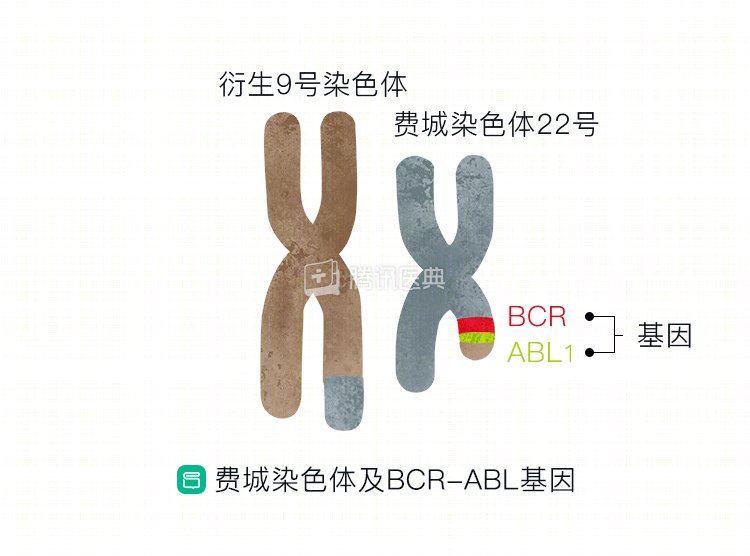
The tyrosine kinase inhibitor imatinib is currently the preferred oral treatment in clinical practice, and most patients are able to achieve a good outcome. The miracle drug that was rendered sky-high in the movie is now in Shanghai’s health insurance.
Of course, chemotherapy plus bone marrow transplantation is still an important means of cure for most acute leukemias and chronic leukemias with poor prognosis.