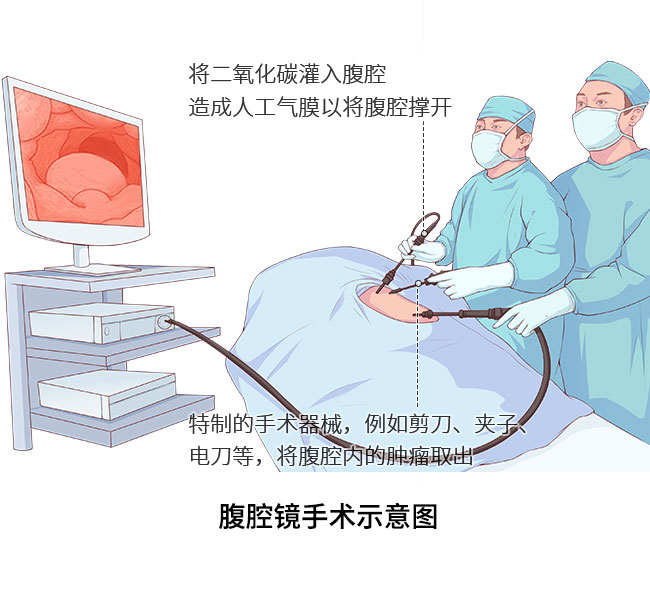
Many people are not unfamiliar with laparoscopic surgery, in which a few holes are made in the stomach and the surgery can be done without an incision. However, there are now more advanced techniques that allow complex surgeries to be done through just one hole in the belly.
Single-incision laparoscopic surgery (SILS) is a new direction in minimally invasive surgery. The single-incision laparoscopic surgery is a laparoscopic treatment that uses the umbilicus as the only incision, and the surgeon completes the resection of gastric cancer through the umbilical incision. This procedure is still in its infancy and still less used, mainly for the resection of early gastric cancer and gastric mesenchymal tumor.
What are the advantages?
- Doctors can look directly into the abdominal cavity and perform surgery on the stomach. For example, when a tumor is located in an area that is not easily resectable, especially at the esophagogastric junction, the surgeon can easily visualize the abdominal cavity and remove the tumor through an intra-gastric single-port laparoscope.
- Taking the umbilicus as the incision can reduce surgical scarring and achieve a cosmetic result.
- Minimally invasive is more prominent, with smaller incision area, lower postoperative complication rate, and shorter recovery time.
What are the drawbacks?
- Because the surgical instrument placement sites are relatively concentrated, they tend to interfere with each other, which affects the surgical field of view and the surgeon’s operation, and the coaxiality of instruments and light sources, i.e., entering from the same entrance, will to a certain extent affect the surgeon’s judgment of depth and distance, thus increasing the difficulty of surgery and the surgeon’s fatigue.
- Single-port laparoscopic surgery is difficult and technically demanding, and must be performed by skilled surgeons.
Which patients can use it?
Physicians may consider performing a single-port laparoscopic resection for patients with gastric cancer who have the following conditions
- No history of abdominal surgery;
- No severe adhesions between abdominal organs and no extensive invasion or encapsulation around the tumor;
- Normal or thin body size. Single-port instrumentation space may be limited in obese patients, resulting in inability to complete the procedure. Some foreign scholars claim that intra-gastric single-port laparoscopic surgery is also feasible in obese patients, but it is still not possible to overcome the limitations of surgery in hyperobese patients [body mass index (BMI) > 50 kg/m].
As the detection rate of early gastric cancer continues to increase, single-port laparoscopic surgery in the stomach, which is more minimally invasive and aesthetically pleasing, certainly has a promising future. The success of single-port laparoscopic surgery to complete radical total gastric resection in recent years implies that there are no insurmountable technical barriers to its treatment of progressive gastric cancer, but the long-term efficacy remains to be further proven.