Treatment of thyroid cancer is primarily surgical, including surgery on the thyroid itself and lymph node dissection, depending on the patient’s age, tumor size, degree of spread (whether it has metastasized), and overall health status. Surgery is often very effective.
There are three types of surgery
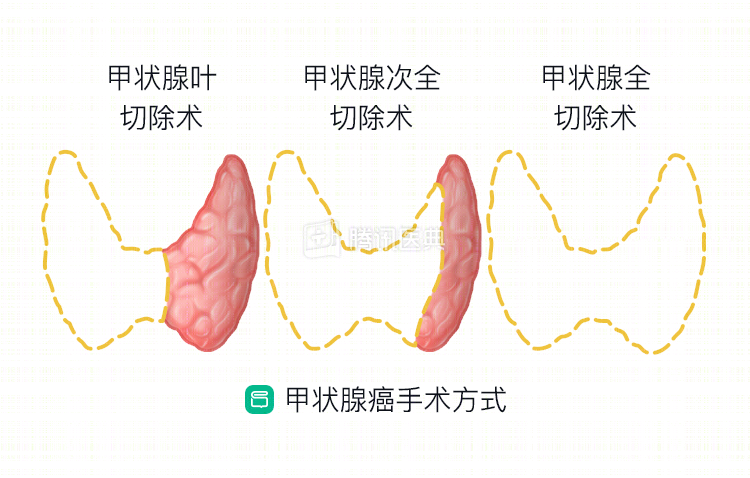
There are three types of surgery for thyroid cancer: total, near-total, and lobectomy.
- Total thyroidectomy, the most common type of thyroid cancer surgery, has the highest cure rate and allows for more effective follow-up radioactive iodine therapy and thyroid hormone therapy. During the procedure, the lymph nodes in the neck may also be removed (called “cervical lymph node dissection”) and tested for cancer cells. If the thyroid cancer has metastasized to the lymph nodes, the doctor will use radioactive iodine therapy to destroy any remaining cancer cells.
- Near-total thyroidectomy removes almost all of the thyroid gland, leaving only a small amount of tissue. Doctors usually do this when the tumor is small in size.
- Thyroid lobectomy, in which only one thyroid lobe is removed. It is indicated when the cancer is small and is present in only one lobe. It is no more complicated than total excision and is less likely to cause hypothyroidism. However, the likelihood of recurrence after surgery is greater than with total excision.
Most thyroid cancers grow slowly, and your doctor may recommend observation and no surgery first. In this case, an endocrinologist should be asked to closely monitor the development of the thyroid cancer and changes in thyroid function.
What to look for before and after surgery
Before thyroid cancer surgery, laboratory and imaging tests and, if necessary, other ancillary tests will be done to understand the patient’s overall health status. The doctor will also tell the patient what to expect in terms of diet. Some medications may need to be taken the day before surgery.
The surgery usually requires general anesthesia, and the surgeon may make one or more incisions in the patient’s neck, depending on the type of surgery.
There are usually no complications with thyroid surgery. You may feel pain in your neck after surgery, but this is relieved with some medicine. You may have hoarseness or a sore throat for a few days after surgery. There may also be tissue fluid leaking from the incision, but don’t worry about this; it helps and will be taken care of by your doctor after a while.
Whether you have an outpatient or inpatient procedure also depends on the type of surgery. After surgery, your doctor will tell you how to recover and how to follow up. You may have to start other treatments soon after surgery.
If you have a total excision, your thyroid gland is gone, and you can’t produce thyroid hormones. The doctor will prescribe medications to replace the thyroid hormone, which may be needed for life. However, the doctor will adjust the dosage based on the results of the review to make sure the dosage is accurate. If only part of the thyroid gland has been removed, you may not need to take thyroid hormone medication.