The goal of thyroid cancer treatment is to eliminate the cancer cells in the patient’s body. Doctors will choose different treatment options depending on the patient’s age, tumor type, stage, and health status. Most patients require surgery to remove part or all of the thyroid gland. Sometimes suspicious nodes or lymph nodes are also removed for tests to diagnose whether the cancer is present.
Common treatment options include the following:
Surgery
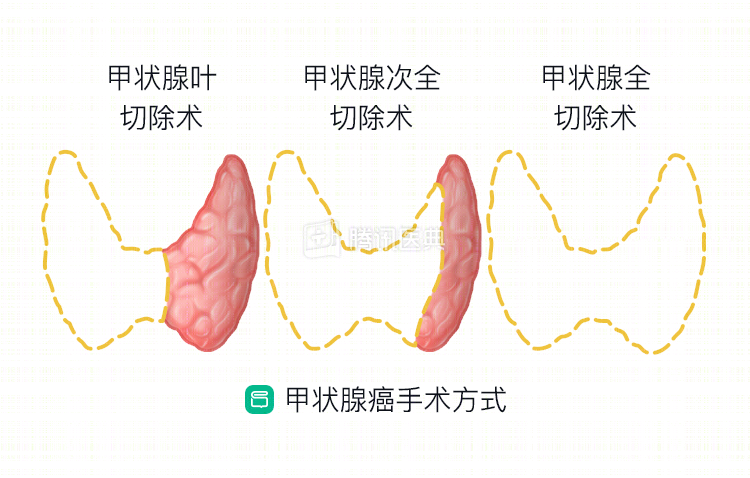
Surgery is the most common treatment for thyroid cancer, and surgical options include:
- Lobectomy: Removal of the thyroid lobe where the tumor is located. The surgeon may biopsy the lymph nodes in the area to determine if they contain cancer cells.
- Proximal total thyroidectomy: Only a small part of the thyroid gland is kept and the rest is removed.
- Total thyroidectomy: Removal of the entire thyroid gland.
- Lymph node dissection: removal of lymph nodes in the neck that contain cancer cells.
Radioiodine therapy
Radioactive iodine (RAI) therapy may be required after surgery to eliminate residual cancer cells and can treat follicular and papillary cancers. Only the thyroid tissue absorbs iodine, and patients who ingest radioactive iodine (I-131) orally can destroy cancer cells that remain in the thyroid tissue and metastasize to other parts of the body.
Radioactive iodine treatment cannot be given until several weeks after surgery, during which time symptoms such as fatigue, weakness, weight gain, depression, memory loss, and constipation may occur.
Chemotherapy and radiation therapy
Chemotherapy stops the growth of cancer cells with drugs that both kill the cancer cells and stop them from dividing. The drugs are taken by mouth or injected (intravenously or intramuscularly) into the bloodstream and delivered throughout the body (called “systemic chemotherapy”). When doctors inject chemotherapy drugs directly into areas such as the cerebrospinal fluid, organs or abdominal cavity, they mainly kill cancer cells in these areas (called “local chemotherapy”). Doctors choose chemotherapy based on the type of tumor and the stage of the disease.
Radiotherapy is a treatment for thyroid cancer that uses high-energy X-rays or other types of radiation to kill cancer cells or prevent them from growing. It can be given after surgery to kill cancer cells that have not been removed. There are two types of radiation therapy. External radiation therapy uses a machine to irradiate the tumor from outside the body. Internal radiation therapy involves placing a radioactive substance sealed in a needle, particle, or catheter directly into the tumor site or its immediate vicinity. Doctors choose the type of radiation therapy based on the type of tumor and the stage of the disease.
Endocrine therapy (TSH suppression therapy)
Thyroid hormone is a hormone secreted by the thyroid gland and released into the bloodstream. Patients who have undergone a near-total or total thyroidectomy may experience a postoperative deficit in thyroid hormone production and an increase in thyroid stimulating hormone (TSH) production, which can stimulate thyroid cancer growth or increase the chance of recurrence through its receptors TSH can stimulate the growth of thyroid cancer through its receptors or increase the chance of recurrence . Therefore, patients undergoing near-total or total thyroidectomy need to take thyroxine tablets for life to prevent hypothyroidism and suppress TSH.
Targeted therapy
Targeted therapy is the use of drugs or other substances to identify and attack specific cancer cells without harming normal cells. Tyrosine kinase inhibitor (TKI) is one type of targeted therapy, and these drugs inhibit tumor growth by blocking the supply of substances needed for tumor growth and promote apoptosis. Vandetanib and sorafenib are TKI’s used primarily to treat certain types of thyroid cancer.
Follow-up and review
After receiving conventional treatment as described above, 6- to 12-month follow-up is required. In addition to regular review, it is important to contact your doctor if you notice a lump in your neck or if you have trouble breathing or swallowing.
At your follow-up, you may need to have blood tests to see your TSH level and to help your doctor determine if your thyroxine dose is appropriate. Your doctor may also recommend other tests, such as X-rays, CT, etc.
Treatment for side effects in addition to conventional treatment
Surgery
Post-operative pain is usually very mild and usually lasts only a few days. The doctor will prescribe pain medication to relieve the pain. Thyroid hormone replacement therapy may be required for life after surgery.
Radioiodine therapy
After radioactive iodine treatment, the patient may be “radioactive” for a period of time. The doctor will instruct the patient on how to live in a way that reduces the effects of radiation on others.
Endocrine therapy
The likelihood of side effects from endocrine therapy is very low if the correct dose is taken. Excessive doses may lead to tachycardia or abnormal heart rhythms, and long-term overdoses may also lead to osteoporosis.
Home treatment can help alleviate treatment side effects.
Patients may also receive or choose to receive the following treatments:
Treatment when the disease worsens
Thyroid cancer may recur. It can be detected by physical examination, ultrasound, and elevated thyroglobulin levels. Don’t stress. A recurrence of thyroid cancer is usually curable, especially if it has metastasized only to the lymph nodes in the neck.
When the tumor has metastasized to other parts of the body, surgery, radioactive iodine therapy, chemotherapy, and radiation therapy may be needed.
Clinical trials
Clinical trials may be recommended by your doctor. Clinical trials are part of the cancer research process that allows doctors to determine if a new cancer treatment option is safe and effective, or better than standard treatment options. For some patients, this may be the best option. Currently, clinical trials in thyroid cancer are looking at targeted therapy with TKI.
Supportive therapy
This is a form of treatment for patients with severe disease. It is not intended to cure the disease, but to provide care from both the body and mind to improve quality of life. Patients can receive supportive care while receiving conventional treatment or when conventional treatment is not working well.
Health care providers will relieve patients’ pain and side effects and help choose treatment options. They will also tell relatives how to give support and encouragement to the patient.