For most patients with early-stage prostate cancer with a life expectancy of >10 years, radical prostatectomy is an important tool for curing prostate cancer.
Radical prostatectomy has been a classic procedure for more than 100 years and has been refined by generations of urologists. Simply put, this procedure is the complete removal of the prostate gland, located deep in the pelvis, with the two seminal vesicles attached to the back of the prostate. Since the prostate is located in the necessary path between the bladder and the urethra, the bladder and urethra are also sutured together after the prostate is removed, thus restoring the flow of urination.
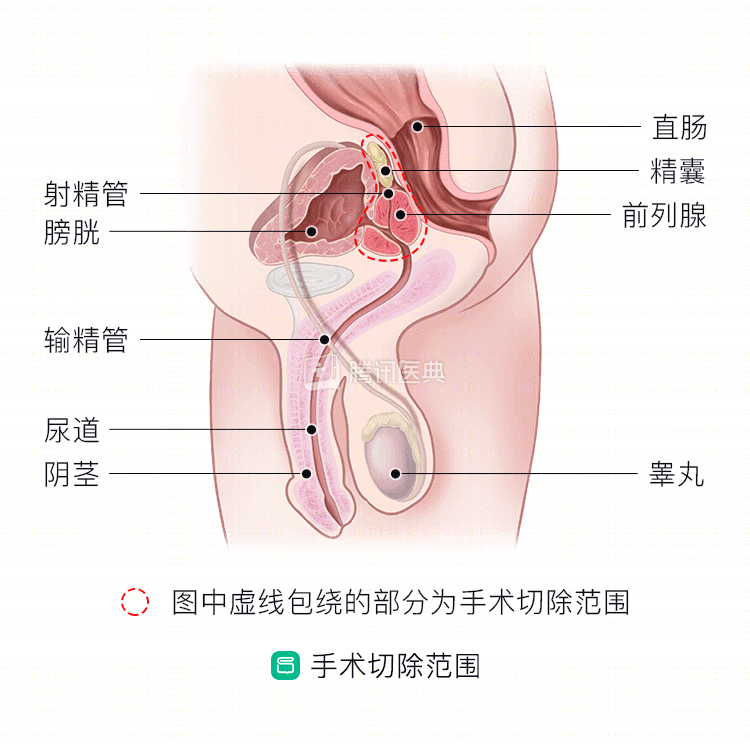
Radical prostate cancer surgery is a major urological operation that requires high surgical skills because of the small pelvic space and the abundance of vascular nerves.
Before the 1970s, this procedure was known as “surgery in a sea of blood” because of the large amount of bleeding. In addition to heavy bleeding, complications such as intraoperative rectal injury, bladder injury, postoperative venous thrombosis, and bladder neck contracture can occur. The first of these is the “new” version of the “new” version.
The technique of retropubic radical prostatectomy has improved considerably with the understanding of the distribution of blood vessels around the prostate by anatomists and with the improvement of surgical techniques. In particular, Professor Walsh of Johns Hopkins University has improved this procedure, which has resulted in significantly less bleeding and improved surgical safety. In addition, the clear view helps to protect the urethral sphincter and sexual nerve, thus making postoperative incontinence and sexual dysfunction much less likely in patients with early prostate cancer.
Domestic surgeons have been working on radical anatomic prostate cancer since the 1990s, and the surgical results and postoperative complications have reached an internationally advanced level.
However, there are some individual differences in outcomes after radical prostate cancer surgery because each patient’s tumor stage and grading is different.
Radical prostate cancer surgery can cure the vast majority of patients with early-stage prostate cancer. However, if the tumor is more aggressive, or if it is larger and more extensive, or even spreads to the seminal vesicle gland, bladder neck, or urethra, the risk of recurrence after surgery is mostly greater.
How do you predict the outcome of the surgery?
This is the time to rely on the postoperative pathology results.
The pathologist will slice the cut specimen and perform accurate pathological staging and grading under the microscope. If the tumor is found to have grown into the prostate envelope, seminal vesicles, nerves, or urethra, or if the lymph nodes are positive, then the tumor is on the advanced side and the patient will experience a recurrence some time after surgery. For these patients, post-operative adjuvant radiotherapy or endocrine therapy is required to optimize the outcome of treatment.