From an epidemiological point of view, stomach cancer is not an infectious disease; the oncogenes or cancer cells cannot be transmitted to another person by any means, so stomach cancer is not contagious. However, from an etiological perspective, H. pylori, one of the main risk factors for the development of gastric cancer, can be transmitted from person to person, so from this perspective, gastric cancer can be “contagious” again.
Finding the culprit: H. pylori influences the development of gastric cancer
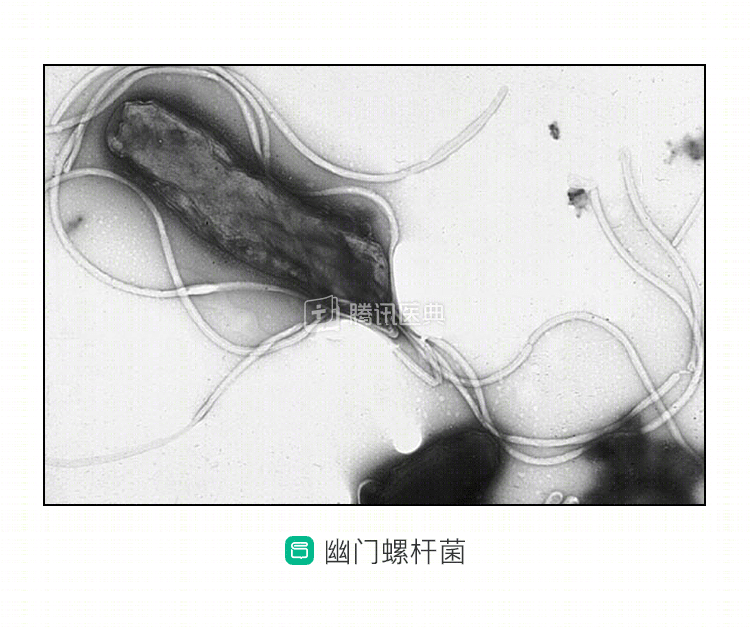
Helicobacter pylori (Hp) has the ability to adapt and regulate an acidic environment, so it can grow and reproduce in an acidic environment such as gastric juice.
In 1994, H. pylori was classified as a Group I carcinogen, but the role of H. pylori in the development of gastric cancer has not been fully elucidated. Recent views suggest that gastric cancer is an infection-related disease, and that virulence factors, genetic factors, and environmental factors combine to influence the gastric carcinogenic role of H. pylori. H. pylori may increase the risk of gastric cancer through the following pathways:
- Neutralizing gastric acid, making the stomach environment more favorable for the growth of some bacteria that can break down nitrates, and these bacteria contribute to the conversion of nitrates into nitrites and nitrosamines, which can cause cancer;
- Causing chronic inflammation of the gastric mucosa, which together with other factors accelerates the overproliferation of mucosal cells and induces genetic mutations that cause cancer;
- The metabolites of H. pylori can directly damage the gastric mucosa and have carcinogenic and pro-carcinogenic effects.
Preventing the worst: cutting off the transmission of H. pylori
H. pylori can be transmitted in many ways. Cutting off its transmission pathway can prevent H. pylori infection and thus reduce the risk of gastric cancer. In this way, it is an effective means of preventing the “transmission” of gastric cancer.
Human transmission
H. pylori can be transmitted from one person to another, i.e., person-to-person, by oral-oral routes (e.g., saliva from mother to child or husband to wife), fecal-oral routes (e.g., contamination of water by feces from an infected person), gastric-oral routes (e.g., transmission through gastroesophageal reflux or vomited stomach contents), and intra-familial transmission (e.g., through close contact of family members, exposure to a common gastric juice). The oral-oral route is the main mode of transmission. Some researchers believe that the oral cavity is not a “permanent residence” for H. pylori, and that H. pylori in the oral cavity mainly comes from contaminated food. The gastro-oral route may be the typical mode of infection in children.
Transmission through water
H. pylori can survive in infectious forms in milk and tap water for several days and in river water for several months, suggesting that it may be transmitted through water sources.
Transmission through animals
H. pylori has the potential to be transmitted through the food chain, through contact with animals, and so on. However, most scholars believe that human-animal contact is extremely limited compared with the widespread nature of H. pylori infection, so transmission through animals is extremely unlikely.
Transmission by medical route
Endoscopy is commonly used for the diagnosis and treatment of gastrointestinal diseases. Because of their complex structure, endoscopes are often difficult to sterilize thoroughly, making them susceptible to transmission of H. pylori, a medically-transmitted infection. Japanese researchers tested the biopsy-attraction tube of manually cleaned gastric fiberscopes and found a 50% detection rate of H. pylori genes, of which 19% of specimens were viable by bacterial culture.
To summarize, gastric cancer itself is not contagious, but H. pylori, a major risk factor associated with the development of gastric cancer, is infectious, and in that sense gastric cancer is “contagious”. However, more than half of the world’s population is infected with H. pylori, and only 1 to 3 percent of the infected population eventually develops gastric cancer. The first is that it is not always possible to get infected with H. pylori, but on the other hand, it is possible to eradicate H. pylori by talking to a professional and taking appropriate measures.