Key points of this article:
- Acute lymphoblastic leukemia (ALL) is a type of hematologic neoplasm also known as acute lymphocytic leukemia or acute lymphoid leukemia.
- Acute lymphoblastic leukemia is relatively rare in adults compared to other leukemia types.
- Acute lymphoblastic leukemia originates from white blood cells in the bone marrow that develop from naïve lymphocytes or lymphoblasts (an immature type of lymphocyte).
- Acute lymphoblastic leukemia invades the bloodstream and can spread around the body to other organs, such as the liver, spleen, and lymph nodes. But it does not usually form solid tumors like other cancers.
- Acute lymphoblastic leukemia is an acute leukemia, which means that patients can deteriorate rapidly. If left untreated, patients can die from it in just a few months.
Cause of the disease
For most patients, the cause of acute lymphoblastic leukemia is unknown. Therefore, there is no method to prevent the disease. However, some known risk factors may increase the probability of developing acute lymphoblastic leukemia in people. However, it is uncertain whether these risk factors directly contribute to acute lymphoblastic leukemia. These risk factors include:
- Receiving high doses of radiation therapy while being treated for other types of cancer;
- Exposure to certain chemicals, such as benzene – an organic solvent used in oil refining and other industrial production and may also be found in cigarette smoke, certain cleaning products, detergents, and paint strippers;
- Infection with human T-cell lymphoma/leukemia virus-1 (HTLV-1) or EBV;
- Companying genetic syndromes, such as Down syndrome;
- Caucasian;
- Male.
Symptoms
Acute lymphoblastic leukemia can cause a variety of symptoms. Some of these symptoms may be nonspecific, meaning that diseases other than leukemia may also cause these symptoms. These nonspecific symptoms include:
- Fatigue;
- fever;
- loss of appetite or weight loss;
- Night sweats.
Many of the symptoms of acute lymphoblastic leukemia are caused by a lack of normal blood cells. This is because the patient’s bone marrow is filled with a large number of leukemia cells, leaving not enough room for normal blood cells to grow.
The lack of red blood cells may cause symptoms of anemia, which may manifest as follows:
- Fatigue or weakness
- Dizziness
- Chill fear
- Dizziness and dizziness
- Shortness of breath
Decreases in normal white blood cells may lead to the following symptoms:
- Fever
- Recurrent infections
A deficiency of platelets may cause the following symptoms:
- skin bruising in the absence of an obvious trigger;
- Frequent severe nosebleeds, bleeding gums, or other abnormal bleeding that does not stop (such as minor scratches).
Other symptoms, depending on where the leukemia cells are bruised, may include:
- Abdominal swelling caused by infiltration of leukemia cells in the liver or spleen;
- Enlarged lymph nodes, such as cervical lymph nodes, inguinal lymph nodes, axillary lymph nodes, or supraclavicular lymph nodes;
- Present bone or joint pain;
- If leukemia cells have spread to the brain, the patient may have headaches, balance disturbances, vomiting, seizures, or blurred vision;
- If the leukemia cells have spread to the chest, the patient may have difficulty breathing.
Treatment
Acute lymphoblastic leukemia is actually an umbrella term for a group of related heterogeneous diseases, or it contains several subtypes. Therefore, the choice of treatment options often depends on the subtype of leukemia the patient has as well as other relevant factors. Acute lymphoblastic leukemia may have a variety of treatment options for physicians to choose from. The main options include the following:
Chemotherapy
That is, a combination regimen using anti-cancer drugs, and treatment typically lasts for several years.
The drugs used usually include the following:
- Cyclophosphamide
- Alglucoside
- Rosamycin or adriamycin
- Etoposide
- L-asparaginase or poly(ethylene glycol)-L-asparaginase
- 6 -mercaptopurine
- Methotrexate
- Glucocorticoids (prednisone, dexamethasone)
- Teniposide
- Vincristine
Targeted therapies
That is, drugs that target specific structures on cancer cells and have fewer side effects than chemotherapy.
These drugs include: bonatumumab, as well as dasatinib, imatinib and nilotinib, and panatinib, which attack cells that contain the Philadelphia chromosome.
Radiotherapy
The principle is to use high-energy radiation to kill cancer cells. This therapy is not commonly used for acute lymphoblastic leukemia, but can be used to treat leukemia that has invaded the brain or bones, and can also be used before a stem cell transplant.
Bone marrow transplantation
The treatment process involves (if the patient is well enough) the use of high-dose chemotherapy and radiation therapy followed by the input of bone marrow stem cells. The stem cells usually come from a donor or, in rare cases, from the patient’s own bone marrow or peripheral blood. If the patient cannot tolerate high-dose chemotherapy and radiation, a non-cleared marrow “microtransplant” can be used, with low-dose chemotherapy used during treatment.
There are two parts to treatment: induction therapy and post-induction therapy.
Treatment is divided into two parts: induction and post-induction.
The goals of induction therapy include the following:
- Kill as many leukemia cells as possible;
- Restoring the body’s blood cell count to normal levels;
- Prolonging the patient’s symptom-free time as much as possible.
About 80% to 90% of adult patients can go into remission after induction therapy, but many of these people also experience relapses, so the final overall cure rate is only 30% to 40%. Therefore, patients need post-induction therapy to prevent relapse. This requires a course of treatment lasting 2 to 3 years. Typically, the drugs used in post-induction therapy are different from the induction regimen. The goal is to completely remove residual leukemia cells from the body that cannot be detected by routine blood or bone marrow testing.
CAR-T cell therapy
The US Food and Drug Administration (FDA) has approved a type of immune cell gene therapy called CAR-T. This approach uses the patient’s own immune cells, called T cells, to treat leukemia. Doctors isolate T cells from a patient’s blood and transfer new genes to them to prepare new immune cells with special functions that have the ability to recognize and kill cancer cells.
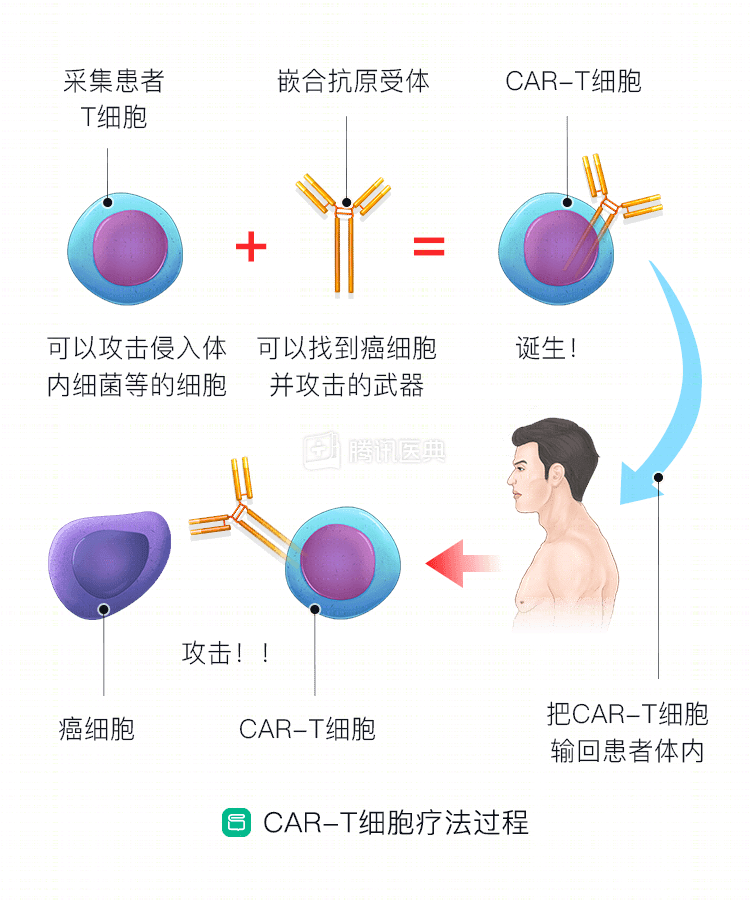
One of the drugs, tisagenlecleucel (Kymirah), is only indicated for patients under 25 years of age with B-cell acute lymphoblastic leukemia who have failed to respond to other regimens. Scientists are currently working on a CAR-T cell therapy with a broader range of indications.
Prognostic influences
Acute lymphoblastic leukemia is an acute leukemia that can rapidly deteriorate and lead to death if not controlled in time. The prognosis of patients depends on the following factors:
- Age: Younger patients tend to have a better prognosis.
- Laboratory findings: Patients who have a low white blood cell count at the time of diagnosis also tend to have a better prognosis.
- Subtypes of acute lymphoblastic leukemia: For example, B-cell acute lymphoblastic leukemia or T-cell acute lymphoblastic leukemia, the prognosis varies by subtype.
- Whether there are chromosomal abnormalities (called Philadelphia chromosomes): if so, this means a poorer prognosis, but can be combined with targeted drugs.
- Patient response to chemotherapy: If the patient is unable to detect leukemic cells after 4 to 5 weeks of starting treatment, it will mean a better prognosis.