Leukemia manifests as a malignant proliferation of hematopoietic stem cells in the bone marrow, producing large numbers of cancer cells that are stalled at various stages of cell development. These cancer cells lack the physiological function of the corresponding normal blood cells, and in severe cases inhibit normal hematopoiesis, causing anemia, bleeding and infection, and infiltrate into lymph nodes or other organs and tissues, causing enlargement of lymph nodes or organs, loss of function, and even pain and other symptoms.
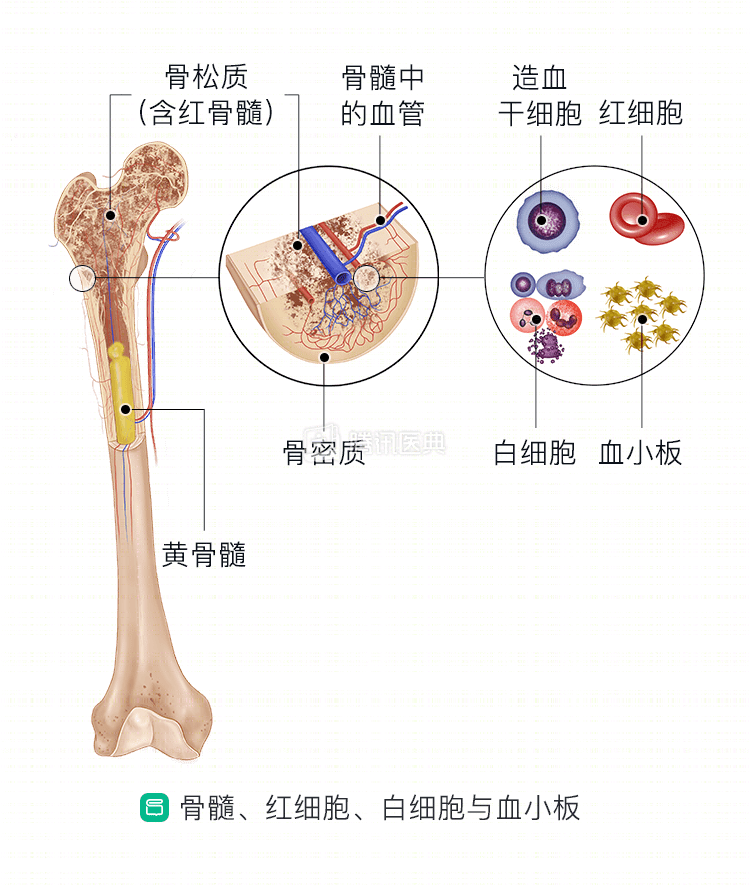
Leukemia can be divided into two categories: acute and chronic, depending on the corresponding developmental stage of the cancer cells; and lymphocytic leukemia and myeloid leukemia, depending on the type of cancer cells.
Accordingly, leukemia is divided into four main subtypes:
- Acute lymphoblastic leukemia (ALL)
- Acute myeloblastic leukemia (AML)
- chronic lymphocytic leukemia (CLL)
- chronic myelogenous leukemia (CML)
The course, symptoms, treatment modalities, and prognosis of different subtypes of leukemia vary.
It is not clear what causes leukemia, but there are factors that may increase the risk of certain specific types of leukemia, and these are called risk factors for leukemia.
But it is important to note that many people with leukemia do not have any of these risk factors, and people with these risk factors do not all develop leukemia.
Common risk factors for leukemia include:
- High dose radiation exposure
- Having received radiation or chemotherapy
- Having a chromosomal abnormality-related disorder, such as Down syndrome
- Exposure to chemicals (e.g., benzene and formaldehyde)
In chronic lymphocytic leukemia (CLL), older men are more likely to develop the disease, and individual cases may have a family history of CLL. People infected with human T-lymphotropic virus 1 (HTLV-I) are more likely to develop adult T-cell leukemia/lymphoma.
Patients with chronic myelogenous leukemia (CML) have a Philadelphia chromosome (Ph) abnormality and a corresponding mutation (BCR/ABL).