Traditional experience has shown that patients with acute leukemia generally can stop chemotherapy for observation after 3 to 4 years of sustained complete remission. With the optimization of individualized regimens for acute leukemia treatment and the availability of tools to detect microscopic residual leukemic foci, there are more objective indicators to determine when a patient with acute leukemia can stop chemotherapy.
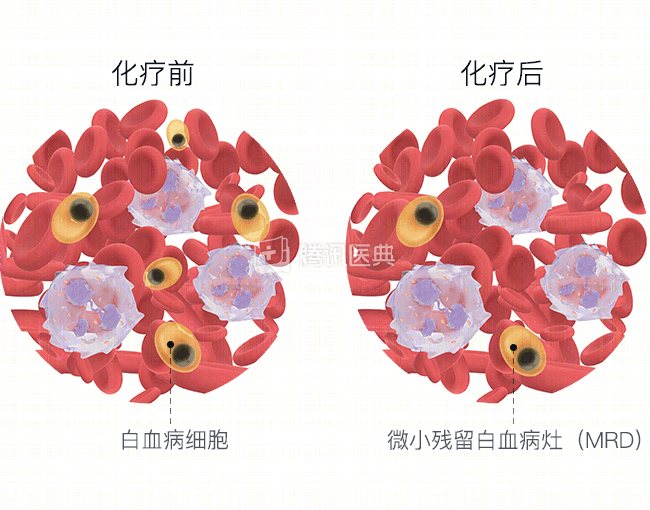
Leukemia in complete remission after induction chemotherapy is typically followed by a consolidation course of 1.5 years for acute myeloid leukemia and about 3 years for acute lymphoblastic leukemia, or by CAR-T or stem cell transplantation. In the event of relapse, re-timing is required after re-induction. The micro-residual leukemia test (current sensitivity of 10) is monitored closely for negativity during treatment, and is monitored closely for 5 years after complete remission to confirm sustained remission.
For patients who are not eligible for chemotherapy or have a high number of comorbidities, chemotherapy can do more harm than good, and a best supportive care regimen is also available.