Lateral cervical lymph node dissection during thyroid cancer surgery may result in injury to the accessory nerve due to inadequate nerve exposure or adhesions between the cervical lymph nodes and the nerve. The probability of this happening is relatively low, less than 2%.
The accessory nerve is a cerebral nerve that innervates the movement of the two major muscles of the neck, the sternocleidomastoid and trapezius muscles. The main function of the sternocleidomastoid muscle is to innervate neck movements, with one side contracting to turn the head to the opposite side and both sides contracting to tilt the head back; the trapezius muscle has the function of assisting in lifting the shoulder.
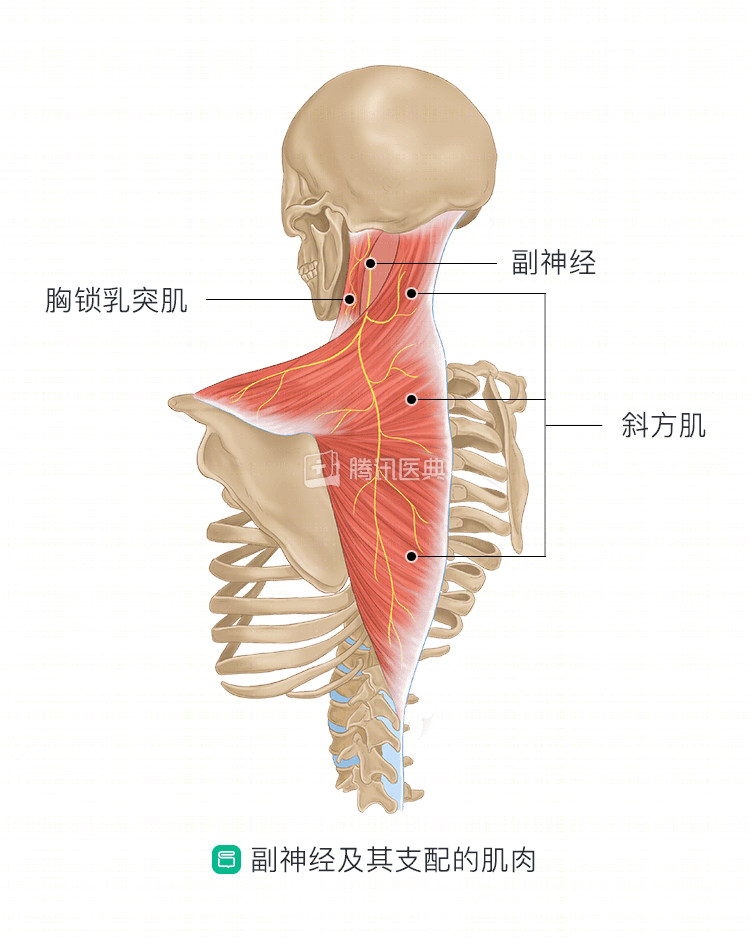
After paraspinal nerve injury, muscle movement is affected, as evidenced by weakness of the affected shoulder and upper extremity elevation. However, as long as it is not completely severed, most paraspinal nerve injuries are temporary and can be partially or completely restored with postoperative upper extremity arm raising exercises.
The specific exercises are:
Standing against the wall with the upper extremity flat against the wall, gradually climb your hand up along the wall to the highest point you can lift, and then gradually move your hand back down to the origin. Repeat this movement 10 to 15 times daily.

Doctors recommend regular functional exercise after discharge if you experience upper extremity supination weakness after surgery. Most patients can significantly improve their symptoms after a few months of rehabilitation exercises.
Co-written by: Fudan University Cancer Hospital Dr. Hu Jiaqian