After thyroid cancer surgery, your doctor will leave a drainage tube in your neck to drain the fluid. Normally, this tube drains a small amount of light bloody fluid, but some patients find that it drains a fluid that looks like milk. What is going on here?
This is “celiac disease,” also known as “lymphatic leak,” which is a condition in which lymphatic fluid “leaks” due to damage to the lymphatic vessels. The lymph fluid is usually a milky white, greasy, cloudy fluid.
Why does thyroid cancer surgery cause celiac disease?
Lymphatic vessels are located throughout the body. Any surgery that involves lymph node dissection can produce a lymphovascular leak. Our cervical lymphatic system is particularly rich: the two main “terminals” of the body’s lymphatic circulation, the thoracic duct and the right lymphatic duct, both enter the venous system at the base of the neck.
In thyroid cancer surgery, the root of the neck is the place where the lymph nodes in the neck must be removed. Therefore there is a risk of injury to the lymphatic vessels and postoperative celiac leakage. In a small number of cases, celiac leakage may also occur after lymph node dissection in the central region. Statistically, the incidence of celiac disease is between 1% and 5%.
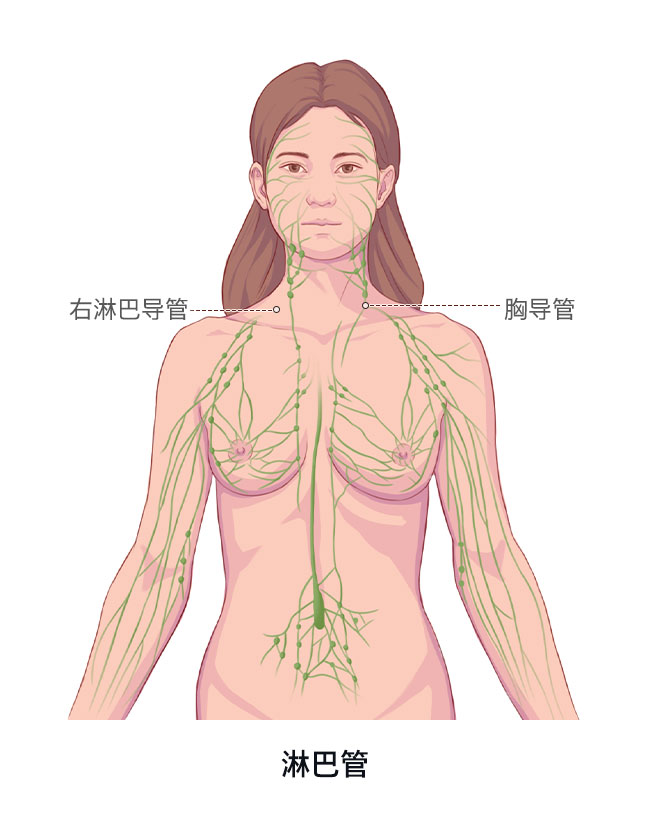
In addition, the thin wall of the lymphatic vessels does not completely prevent postoperative celiac leakage, even if the surgeon ligated all the stumps intraoperatively.
How is celiac leakage detected?
The typical celiac leak is a milky, cloudy fluid, but not all celiac leaks present typically, and its appearance depends largely on the amount of fat in the diet. If you eat a greasy diet after surgery, celiac disease will be more pronounced.
Celiac disease in the early postoperative period may be masked by normal drainage and present only as increased light blood drainage, slightly cloudy, with a little “grease”.
To confirm the presence of celiac disease, the surgeon can perform several small “tests”
- Put you on a high-fat diet and confirm if the drainage fluid has a typical milky, cloudy appearance.
- Let you fast, and if the drainage fluid changes color from cloudy to clear, this is also confirmed.
- Laboratory tests to find out the concentration of “triglycerides” in the drainage fluid.
Celiac disease contains high concentrations of fat, and the accumulation of celiac disease in the neck can also lead to wound infection, which can have serious consequences if left untreated.
How should I cooperate with my doctor in the event of a celiac leak?
Eat a light diet
If you have just had celiac disease, the first thing you need to do is “keep your mouth shut”, which means a low-fat diet. Limiting the amount of fat absorbed through the intestines will reduce celiac production.
High volume requires fasting
If the amount of celiac fluid is large, more than 1000 mL per day, fasting needs to be considered. Don’t worry, your doctor will provide you with nutrition through intravenous infusions and prescribe growth inhibitors to reduce celiac disease.
Negative pressure suction
In addition to reducing celiac production “from the inside” through dietary control, your doctor can also remove celiac disease “from the outside” with the help of a negative pressure device. The suction device uses the vacuum principle to maintain negative pressure in the suction head, and the atmospheric pressure squeezes the material outside the suction head (celiac fluid) toward the suction head, thus achieving aspiration.
Effective drainage prevents secondary infection, and the uniform negative pressure promotes skin apposition and facilitates wound healing. When the tissue around the injured lymphatic vessels grows up and the stump of the lymphatic vessels is wrapped, the celiac leak naturally improves.
On top of negative pressure suction, the surgeon may also apply a local pressure dressing to the wound with gauze held under pressure at the base of the neck, which can compress the lymphatic vessels and encourage closure of the lymphatic vessel stump.
If the celiac leak does not improve after more than 3 days of combined use of the above methods, and the flow is greater than 1000 mL per day, or if there is severe wound infection and systemic malnutrition, then surgical treatment is required.
Before surgery, your surgeon will recommend a high-fat diet, or nasal milk, to increase celiac production so that the leak can be quickly located, sutured, and filled and reinforced with surrounding muscle during surgery.
Summary:
Celiac disease is a complication of thyroid cancer surgery. Prolonged and massive celiac leakage can cause delayed wound healing, malnutrition, and even secondary infection. Therefore, after thyroid cancer surgery, you and your relatives should closely monitor the drainage and notify your doctor for treatment if you find any abnormalities.
Co-written by Dr. Jiaqian Hu, Cancer Hospital of Fudan University